


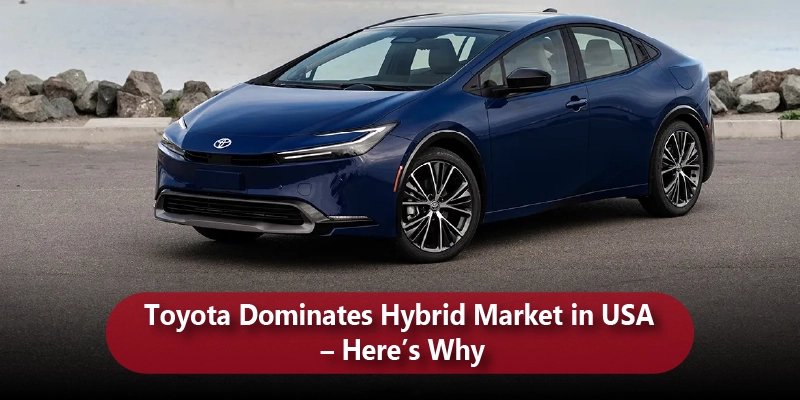
Toyota leads the U.S. hybrid market by offering reliable, fuel-efficient vehicles with long range, meeting real consumer needs better than full EV adoption.
Hybrids are steadily taking over the U.S. auto market in 2026 as drivers prioritize fuel efficiency, long range, and hassle-free ownership over full EV adoption. Toyota’s dominance in the U.S. hybrid market is not accidental, and it is the result of long-term engineering focus, supply chain control, and a clear understanding of consumer behavior. While much of the automotive industry rushed toward full electrification, Toyota took a more measured approach by expanding its hybrid portfolio.
This strategy has paid off significantly. By the end of 2025, nearly half of Toyota’s U.S. sales came from electrified vehicles, with hybrids leading the charge. Rather than forcing a rapid transition to fully electric vehicles. Toyota positioned hybrids as a practical and scalable solution for everyday drivers. The result is a market position that competitors are still trying to match.
Toyota Hybrid Sales Performance in the U.S.
Toyota’s hybrid sales performance in 2025 reflects strong consumer demand and operational execution.
| Metric | Value (2025) |
| Total Electrified Vehicles Sold | 1.18 Million Units |
| Share of Total Toyota Sales | 47% |
| Growth Year-over-Year | ~18% |
| Total Electrified Models | 30+ |
This scale is unmatched in the U.S. hybrid segment. Toyota’s ability to deliver high volumes consistently has strengthened both availability and consumer trust.
Why Toyota Leads the Hybrid Market in the USA
Most reliable SUVs for 2026 combine proven engineering, low repair frequency, and strong resale value making them the smartest long-term investment for buyers. Toyota’s leadership is rooted in execution rather than short-term trends. Several structural advantages contribute to its position.
Long-Term Technology Development
Toyota introduced hybrid technology to the mass market decades ago and has continuously refined its Hybrid Synergy Drive system. This maturity translates into better fuel efficiency, smoother performance, and fewer reliability concerns.
Manufacturing and Supply Chain Strength
A major investment in battery production, including a multi-billion-dollar facility in North Carolina, ensures stable supply and cost control. This reduces dependency on external suppliers and allows Toyota to scale efficiently.
Proven Reliability and Lower Ownership Risk
Toyota hybrids have built a strong reputation for durability. Battery longevity, low maintenance costs, and consistent performance reduce long-term ownership concerns—one of the key barriers for EV adoption.
Strong Resale Value
Hybrid models such as the Prius and Camry Hybrid consistently retain higher resale value compared to conventional gasoline vehicles. This improves the total cost of ownership, making hybrids financially attractive.
Why U.S. Consumers Prefer Hybrids Over EVs
Consumer adoption patterns in the U.S. reveal a clear preference for practicality.
Range Confidence
Hybrid vehicles offer 500+ miles of combined range, eliminating the need for frequent refueling or charging stops.
Refueling Convenience
Unlike EVs, hybrids do not depend on charging infrastructure. A standard fuel stop takes minutes, making them suitable for long-distance travel and regions with limited charging networks.
Cost Considerations
EVs often carry a higher upfront cost. Hybrids provide fuel savings without requiring a significant initial investment or home charging setup.
Transition-Friendly Technology
Hybrids do not require a behavioral shift. Drivers can continue using vehicles as usual while benefiting from improved efficiency.
Best Toyota Hybrid Models in the U.S. in 2025 – 2026
Toyota’s hybrid lineup has expanded across multiple vehicle segments, making it accessible to a wide range of buyers.
Sedans
- Camry Hybrid – Known for reliability and consistent fuel efficiency
- Prius (Redesigned) – Improved design, performance, and technology
SUVs
- RAV4 Hybrid – Best-selling hybrid SUV with strong fuel economy and AWD
- Grand Highlander Hybrid – Large family SUV with impressive efficiency
- Corolla Cross Hybrid – Entry-level hybrid SUV for urban users
Trucks and Performance Hybrids
- Tacoma i-FORCE MAX – Combines torque and fuel efficiency
- Crown Signia Hybrid – Blends luxury with hybrid performance
Toyota vs Honda Hybrids: Market Comparison
The competition between Toyota and Honda remains strong, but both brands follow different strategies.
| Feature | Toyota Hybrids | Honda Hybrids |
| Efficiency | Higher overall MPG | Slightly lower |
| Driving Feel | Smooth and consistent | More responsive |
| Model Variety | 30+ models | Limited lineup |
| Market Share | Dominant | Moderate |
| Technology Maturity | Highly refined | Newer systems |
Toyota focuses on scalability and efficiency, while Honda prioritizes driving experience. For most buyers, Toyota’s wider availability and proven reliability provide a stronger value proposition.
Cost Savings and Ownership Benefits
Hybrid vehicles provide measurable financial benefits over time.
Fuel Savings
Owners typically save between $600 and $1,200 annually, depending on driving habits and fuel prices.
Maintenance Costs
Hybrid systems reduce engine strain, leading to lower wear and fewer maintenance requirements.
Longevity
Hybrid batteries are designed to last for extended periods, often matching or exceeding the vehicle’s lifespan.
Common Mistakes When Buying a Toyota Hybrid
Even with reliable technology, buyers can overlook important factors.
Ignoring the 12V Battery
Hybrids still rely on a standard 12V battery for auxiliary systems. Neglecting it can lead to unexpected issues.
Skipping Battery Cooling Maintenance
The hybrid battery cooling system requires clean airflow. A clogged filter can reduce performance and lifespan.
Unrealistic Driving Expectations
Hybrids perform best with steady driving and regenerative braking. Aggressive driving reduces efficiency gains.
Market Outlook: What Lies Ahead for Toyota Hybrids
Toyota is expected to continue expanding its hybrid lineup while gradually increasing EV offerings. However, hybrids will remain central to its U.S. strategy in the near term.
Key trends include:
- Increased hybrid adoption across all vehicle segments
- Continued investment in battery manufacturing
- Expansion of plug-in hybrid options
- Gradual integration with EV technology
Toyota’s approach ensures flexibility while maintaining profitability and customer trust.
Frequently Asked Questions
1. Why is Toyota leading the hybrid market in the USA?
Toyota combines reliability, efficiency, and availability, making hybrids practical for everyday use.
2. How many hybrid vehicles did Toyota sell in 2025?
Toyota sold approximately 1.18 million electrified vehicles in the U.S. in 2025.
3. Which Toyota hybrid is best for families?
The Grand Highlander Hybrid offers space, comfort, and strong fuel efficiency.
4. Are Toyota hybrids more reliable than competitors?
Toyota hybrids have a longer track record, making them one of the most reliable options.
5. Do hybrids save money compared to gas cars?
Yes, hybrids reduce fuel costs and often have lower long-term maintenance expenses.
Key Takeaways
Toyota’s hybrid strategy continues to outperform aggressive EV-only approaches in the U.S. market. With nearly half of its sales coming from electrified vehicles, the brand has successfully aligned its offerings with consumer expectations. A wide product range, proven reliability, and cost efficiency position Toyota as the clear leader in the hybrid segment.
Get More Updated Automotive Insights at Askaboutcars!