


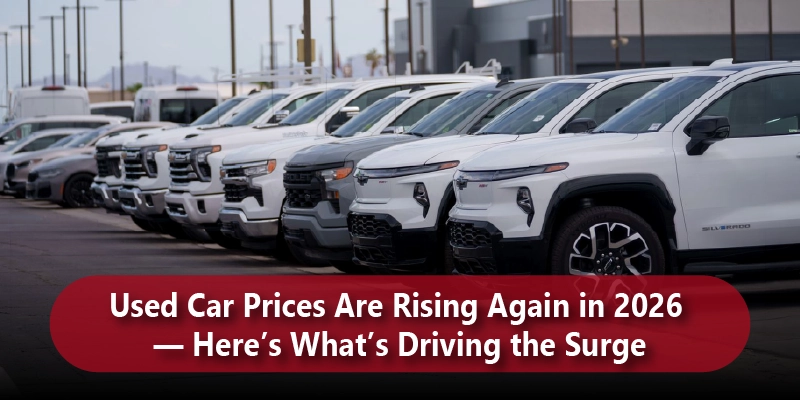
Used car prices in 2026 are rising due to low inventory, high demand for hybrids, and lingering effects of past production slowdowns.
The used car market in 2026 has taken a direction few predicted. What was expected to stabilize after years of disruption has instead become one of the most competitive automotive segments globally. Buyers across the US, UK, and UAE are facing higher prices, limited availability, and faster deal closures.
This shift is not random. It is the result of structural changes that began several years ago and are now fully impacting supply chains, buyer behavior, and pricing dynamics. Understanding these patterns is critical, but not just for buyers but also for sellers looking to maximize value.
Why Used Car Prices Are Rising in 2026
The current market conditions stem from a combination of delayed effects rather than a single trigger. The most significant factor is the production slowdown during 2022- 2023, which created a lasting ripple effect.
During that period, fewer new cars were manufactured and leased. Typically, these vehicles would return to the market after 2-4 years as certified pre-owned inventory. In 2026, that expected supply simply does not exist.
This has created what industry analysts describe as a missing inventory cycle. As a result, buyers are now competing for a smaller pool of vehicles, especially in the high-demand 1-3 year age bracket.
At the same time, modern vehicles have become more technologically advanced. While this improves safety and comfort, it also increases refurbishment costs for dealers. These higher costs are passed on to buyers, further pushing up prices.
Demand Is Shifting Toward Hybrids and Efficient Vehicles
Another major driver of price increases is the shift in consumer preferences. Buyers are prioritizing fuel efficiency, long-term savings, and environmental impact more than ever before.
Hybrid vehicles, in particular, are seeing a surge in demand. They offer a balance between traditional fuel engines and electric efficiency, making them ideal for regions where charging infrastructure is still developing.
Electric vehicles are also gaining traction in the used market, especially as battery health transparency improves. However, hybrids remain the most sought-after segment due to their practicality and reliability.
This demand shift is intensifying competition for a limited number of vehicles, which naturally leads to higher pricing.
Also Read: Top SUVs for Families in Los Angeles: Comfort, Space & Fuel Efficiency Compared
Market Trends Across Different Regions
The rise in used car prices is not uniform across all markets. Regional dynamics play a significant role in shaping demand and availability.
In the United States and the United Kingdom, buyers are focusing heavily on fuel-efficient sedans and hybrid SUVs. Rising fuel costs and stricter emission standards are pushing consumers toward economical options.
In the UAE, however, the trend is slightly different. The demand for premium SUVs and luxury vehicles remains strong. Buyers in this region are less price-sensitive and more focused on performance and brand value.
Another important factor is regulation. Cities with stricter emission norms are gradually phasing out older vehicles, reducing the supply of affordable used cars and increasing demand for compliant models.
Are Prices Expected to Drop Anytime Soon?
Current market indicators show that used car prices are likely to stay elevated throughout 2026, with only minor and gradual fluctuations rather than any sharp decline. The dramatic spikes seen earlier in the year have now transitioned into a more stable but consistently upward pricing trend, indicating that the market is adjusting rather than correcting.
At its core, the issue is structural rather than temporary. The automotive industry is still dealing with the aftereffects of earlier production disruptions, which significantly reduced the number of vehicles entering the market during those years. Because of this, the usual flow of off-lease and trade-in vehicles has been disrupted, creating a persistent inventory gap that cannot be resolved quickly. Rebuilding this pipeline will take time, even as production levels begin to normalize.
Additionally, the pricing pressure from the new car segment continues to influence the used market. With manufacturers maintaining higher price points due to increased production costs and added technology, many buyers are being pushed toward used vehicles as a more viable option. This ongoing shift in buyer behavior is sustaining demand at a high level, which in turn keeps used car prices firm and resistant to any significant drop in the near term.
Advantages of Buying a Used Car in 2026
Despite higher prices, the current market does offer several strategic advantages for buyers who approach it correctly.
One of the biggest benefits is a higher trade-in value. If you already own a vehicle, you are likely to receive a significantly better price than in previous years. This can offset the higher purchase cost of your next car.
Another advantage is access to modern features at a lower entry point. Vehicles from 2023 and 2024 often include advanced driver assistance systems, improved infotainment, and better fuel efficiency.
Financing has also adapted to market conditions. Many lenders are offering longer loan terms for used vehicles, making monthly payments more manageable even at higher price points.
Common Mistakes Buyers Should Avoid
In a high-price environment, decision-making becomes even more critical. One common issue is focusing only on the purchase price while ignoring the total cost of ownership. Insurance premiums, maintenance costs, and fuel efficiency all play a role in the long-term expense.
Another mistake is skipping a pre-purchase inspection. With limited inventory, buyers often rush into deals. However, a higher price does not guarantee better condition.
Many buyers are also waiting for a market crash similar to previous years. Current data does not support this expectation. Waiting may result in fewer options and higher mileage vehicles at similar prices.
Strategic Buying Tips for 2026
Navigating this market successfully requires a more calculated approach. Timing is critical. Vehicles that remain unsold for extended periods often present negotiation opportunities. Even in a competitive market, sellers are more flexible when inventory sits idle.
Exploring less popular or discontinued models can also be beneficial. These vehicles often offer excellent value but do not attract the same level of demand as mainstream options.
Flexibility is another key factor. Being open to different brands, trims, or features can significantly increase your chances of finding a better deal.
Also Read: Why Hybrid Cars Are Outselling EVs in the U.S. (2026 Explained)
Used Car Market 2026: Key Data Overview
| Factor | Impact on Prices | Explanation |
| Low 2023 Production | High Increase | Fewer cars entering the used market in 2026 |
| Hybrid Demand Surge | High Increase | Buyers prioritizing fuel efficiency |
| Rising Repair Costs | Moderate Increase | Advanced tech increases maintenance cost |
| High New Car Prices | High Increase | Buyers shifting to the used market |
| Regional Regulations | Moderate Increase | Older cars phased out in cities |
| EV Market Growth | Stabilizing | Better battery data reduces uncertainty |
Long-Term Outlook
Looking beyond 2026, the market is expected to move toward gradual stabilization, but a return to pre-2020 pricing levels is highly unlikely. The baseline for vehicle pricing has fundamentally shifted, influenced by long-term changes in production economics, technology integration, and consumer behavior.
As new vehicle production continues to recover and leasing cycles begin to normalize, the flow of vehicles into the used market will improve. This will help ease some of the supply pressure that has been driving prices upward. However, this recovery will be slow and incremental rather than immediate, as it takes time for newly produced vehicles to complete their lifecycle and re-enter the market as used inventory.
At the same time, several factors will continue to keep prices elevated. Manufacturing costs remain higher due to advanced technology, stricter safety regulations, and increased reliance on electronic components. Modern vehicles are also more feature-rich, which raises their overall value even in the resale market. Additionally, strong and sustained demand, particularly for fuel-efficient and hybrid models, will continue to support higher price levels.
Frequently Answered Questions
Why are used car prices high in 2026?
Due to low inventory, high demand, and the delayed impact of past production slowdowns.
Will used car prices drop in 2027?
Prices may stabilize slightly, but a major drop is unlikely without economic disruption.
Which vehicles are most expensive in the used market?
Hybrid sedans and SUVs are currently the most in-demand and overpriced.
Is it still a good time to buy a used car?
Yes, if you leverage trade-in value and make informed decisions.
How can I avoid overpaying?
Research thoroughly, inspect the vehicle, and consider less popular models.
Key Takeaways
- The 2026 market is defined by limited supply and strong demand
- Hybrids and efficient vehicles are leading the price increases
- Trade-in values are at record highs, benefiting current owners
- Waiting for a major price drop may not be a practical strategy
- Smart buying decisions can still unlock value in a high-price market
Get More Automotive Insights at Ask About Cars!
For More Car-Related Blogs: Top 7 Reasons Your Check Engine Light Turns On (And What to Do Next)