

Quick Insights before you Read

1. Does stop–and–start traffic affect fuel economy?
Yes. It can reduce fuel efficiency by up to 30%.
2. Why do brakes wear faster in London?
Constant braking causes higher friction and heat.
3. Can city driving drain the battery?
Yes. Short trips lead to undercharging.
4. Is idling harmful to the engine?
Yes. It causes incomplete combustion and carbon buildup.
5. How often should a London-driven car be serviced?
Every 6 months or 5,000 miles.
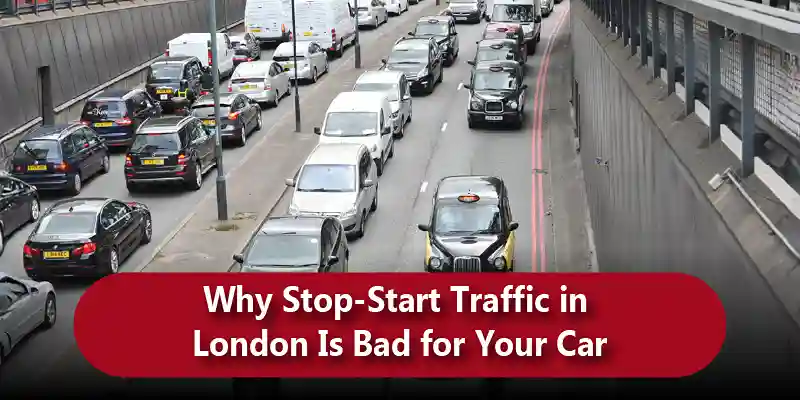
Do you spend more time looking at the bumper in front of you than at the open road? If you navigate the North Circular, the M25, or the narrow streets of Soho daily, you are likely experiencing the hidden costs of stop-start traffic in London. While it’s a daily frustration for your schedule, it is a silent killer for your vehicle’s mechanical health.
Why is stop-start driving more damaging than motorway cruising?
It forces vehicle components to work under constant stress with limited cooling. When a car maintains a steady speed, the engine runs at a consistent RPM and natural airflow helps cool the radiator, brakes, and engine bay. In London traffic, however, the car is subjected to repeated high-intensity bursts of acceleration followed by long pauses in congestion. During these stops, heat builds up without sufficient airflow, causing components to heat-soak and increasing overall wear and mechanical strain over time.
Cause and Effect of Urban Congestion:
- Frequent Gear Changes: Causes premature wear on clutch plates and transmission synchronizers.
- Low Speed & High Torque: Increases pressure on engine bearings and pistons.
- Lack of Airflow: Leads to higher under-bonnet temperatures, degrading plastic and rubber components.
How does city traffic destroy your braking system?
Through excessive heat cycles and friction-induced thinning. In a typical 10-mile London commute, a driver may hit the brake pedal hundreds of times. This constant stop-start driving damage means your braking system never gets a chance to cool down.
The impact on your brakes includes:
- Glazed Brake Pads: Excessive heat can crystallize the pad surface, reducing stopping power and causing squealing noises.
- Warped Rotors: Uneven cooling after heavy use can warp brake discs, leading to steering wheel vibrations.
- Brake Fluid Degradation: Intense heat can boil moisture in the brake fluid, resulting in a spongy brake pedal feel.
Does London traffic damage your engine’s internal components?
Yes, primarily through carbon buildup and oil dilution. Engines are most efficient when they run at a stable, warm temperature. The London traffic impact on cars prevents the engine from staying in its sweet spot, leading to chemical imbalances in the combustion chamber.
Common engine issues from urban driving:
- Carbon Deposits: Unburnt fuel creates soot that clogs Intake valves and Fuel injectors.
- Oil Sludge: Frequent short trips prevent engine oil from getting hot enough to evaporate moisture, turning the oil into a thick sludge.
- DPF Clogging: Diesel cars in London often suffer from blocked Diesel Particulate Filters because they never reach the speeds required for regeneration.
Why is the cooling system under higher pressure in the city?
This is because the cooling system relies almost entirely on the electric fan rather than natural airflow. On open roads, air is forced through the radiator as the vehicle moves, efficiently dispersing heat. In London’s stop-start traffic, however, the car depends on the electric cooling fan to draw air through the radiator. If any component of this system such as the fan, sensor, or coolant level, is weak or failing, heat can build up rapidly, causing the engine to overheat within minutes of being stuck in traffic.
Cooling system vulnerabilities:
- Coolant Degradation: Constant high-heat cycles break down the protective additives in the coolant.
- Fan Motor Failure: Electric fans work overtime in the city, leading to motor burnout.
- Hose Pressure: Elevated temperatures increase the internal pressure on rubber hoses, leading to cracks or bursts.
What is the impact of London’s roads on your suspension?
Increased fatigue from potholes, speed bumps, and constant weight shifting. London is famous for its traffic calming measures. Navigating these while dealing with urban driving wear and tear puts immense strain on the legs of your vehicle.
Suspension damage symptoms:
- Worn Bushings: Constant pivoting during turning and braking tears the rubber bushings in the control arms.
- Blown Struts: Repeatedly hitting speed bumps in heavy traffic can cause hydraulic fluid to leak from the shocks.
- Misalignment: Striking curbs or deep potholes during tight city maneuvering ruins wheel alignment, causing uneven tire wear.
Does the Stop-Start technology in modern cars actually help?
It saves fuel but increases the workload on the starter and battery. Most modern vehicles feature Auto Stop-Start to reduce emissions. While great for the environment, it creates a specific need for specialized city traffic car maintenance.
Consequences for the electrical system:
- AGM Battery Strain: These cars require expensive Absorbent Glass Mat batteries; using a standard battery will lead to failure within weeks.
- Starter Motor Wear: Even though starters are designed for these cars, they still have a finite number of cycles before failure.
How can you mitigate the damage in London?
By shifting from standard to severe maintenance schedules. If your car lives in the city, you cannot follow the 10,000-mile oil change intervals suggested in the manual. You must be proactive to counter stop-start driving damage.
Effective maintenance hacks for Londoners:
- Italian Tune-up: Once a week, take your car on a 20-minute motorway drive to clear carbon deposits and charge the battery.
- Premium Oil: Use high-quality synthetic oil that resists thinning at high temperatures.
- Frequent Filter Changes: Replace your air and cabin filters more often to combat the high levels of London particulate matter.
Wrapping Up: London Traffic Is Slowly Wearing Your Car Down
Stop-start traffic in London does more than test your patience; it steadily accelerates mechanical wear across every major system in your vehicle. From overheated brakes and carbon-clogged engines to stressed cooling systems, weakened suspensions, and overworked batteries, urban driving creates conditions that modern cars were never designed to endure daily without intervention.
The damage is gradual and often invisible until a warning light appears or a costly repair becomes unavoidable. By recognising city driving as severe usage and adapting your maintenance strategy accordingly, you can significantly extend your car’s lifespan, improve reliability, and reduce long-term ownership costs. In London, proactive maintenance is not optional as it is the only way to stay ahead of traffic-induced damage.
Frequently Asked Question
Yes, London is consistently ranked as one of the world’s most congested cities. The high density of traffic lights and narrow streets increases the urban driving wear and tear compared to cities with wider grids.
No. Short distances are actually harder on the car. City traffic car maintenance requires more frequent oil changes because the engine never reaches the temperature needed to clean itself.
This is often the result of London traffic’s impact on cars either your brakes are overheating, or oil leaks are dripping onto a hot exhaust manifold without the wind to dissipate the smell.
Yes. Constant shifting between first, second, and neutral creates heat in automatic gearboxes and wears down the clutch in manuals. This is a primary form of stop-start driving damage.
It can. Premium fuels often contain higher levels of detergents that help prevent the carbon buildup common in stop-start traffic London.
Do you have a clever hack for surviving the M25 or a tip for keeping your engine cool in the summer heat? Join the conversation at Ask about cars!
For More Related Blogs:
Top Car Technology Trends London Drivers Need to Know in 2026
Caught in London? How to Check Your Parking Fines Online
From EVs to Supercars: What’s New on London Roads This Month
London to Berlin: Small Cars That Actually Handle Big‑City Traffic