


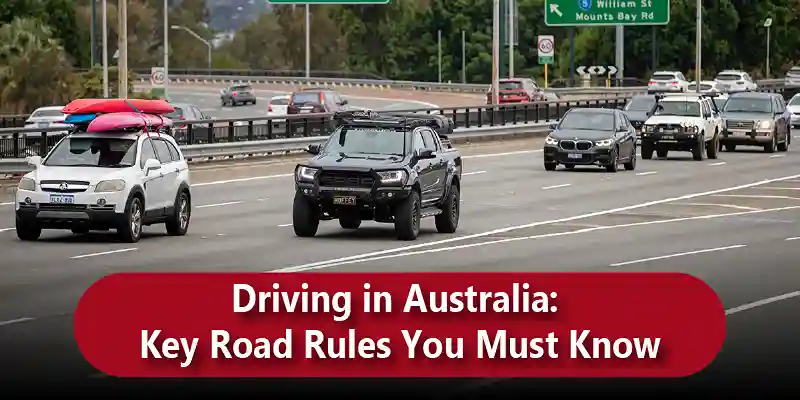
Australia, the land of breathtaking coastlines, vast deserts, and vibrant cities, is a bucket-list destination for any road trip enthusiast. However, before you hit the open road in your rental car, it is essential to understand the unique and non-negotiable key road rules in Australia. Whether you’re a backpacker or a business traveller, this blog is your essential toolkit for safe and legal driving in Australia for foreigners. Failure to follow these rules can result in hefty fines, demerit points, or even the suspension of your driving privileges. Let’s look at the critical laws that every international driver needs to master.

The Fundamental Shift: Left-Hand Drive
The most crucial difference for many visitors will be the side of the road on which you drive.
Left-Hand Driving in Australia Rules: In Australia, all vehicles must drive on the left side of the road. This means the steering wheel is on the right side of the car, and you will be passing other vehicles on the right.
Tip for Tourists: As a simple and continuous reminder, always keep the driver’s side of your vehicle closer to the centre line of the road. Be extra vigilant when pulling out from a stop sign, service station, or when turning at intersections. This is where mistakes most often happen.
Licensing and Legal Requirements
Before you even start your work trip or any adventurous activities, ensure your documentation is in order.
For Tourists and Visitors: If you are a short-term visitor or one of the many Australian road rules for tourists, you can typically use your foreign driver’s licence.
International Driving Permit: If your licence is not written in English, you must carry an official English translation of your licence or an International Driving Permit alongside your original licence. This is a crucial requirement for australia driving rules for international drivers. The IDP essentially serves as a multi-language translation of your domestic licence.
Validity: The time limit for using an overseas licence varies by state or territory, whereas typically three to six months for temporary visitors. If you become a permanent resident, you must apply for a local licence within a set period.
Speed Limits: Kilometres and Compliance
Australia uses the metric system, meaning all distances and speeds are measured in kilometres per hour. You must be aware of Australian speed limit rules as they are strictly enforced using a widespread network of fixed and mobile speed cameras. The posted speed limit is the maximum allowed under perfect conditions. You must always drive slower if the weather, traffic, or road conditions demand it.
Avoid Confusion: Give Way Priorities and Intersection Rules
Australian intersections and give-way rules are based on priority.
Roundabout Rules in Australia
Roundabouts are common in Australian cities and towns. The rule is simple: Give way to any vehicle already in the roundabout.
- Cars within the roundabout must be given precedence.Wait for a safe gap to enter
- Indicate left on approach and exit.
- No signal is required on approach, but you should indicate left before your exit.
- Indicate right on approach and continue signalling right until you pass the exit before your intended exit, then indicate left to exit.
General Give Way
- At an uncontrolled intersection, you must give way to any vehicle approaching from your right.
- Traffic lights, STOP signs, and GIVE WAY signs always override the give way to the right rule. At a STOP sign, you must come to a complete halt; at a GIVE WAY sign, you must slow down and prepare to stop, only proceeding when the path is clear.
Mobile Phones, Alcohol, and Seatbelts
These rules are strictly enforced across the nation and carry severe penalties.
Mobile Phone Laws While Driving in Australia
The rule is clear and zero-tolerance: it is illegal to use a hand-held mobile phone while driving.
- Handheld Use: Holding the phone in your hand or resting it on your lap or shoulder while driving even when stopped at traffic lights is prohibited. This includes calling, texting, checking social media, or any other function.
- Legal Use: You may only use a mobile phone for making or receiving calls, using GPS/navigation, or playing audio if the phone is secured in a commercially designed cradle that does not obstruct your view, and you can operate it without touching it. Learner and provisional drivers often have a total ban on mobile phone use, even hands-free.
Drunken Driving
Australia has very strict laws regarding driving under the influence of alcohol.
- Legal Limitation: For most motorists, the allowable Blood Alcohol Concentration is capped at 0.05%.
- Zero Tolerance: Learners and provisional drivers often have a zero BAC limit
- Police conduct random breath tests on roadsides across the country. The penalties for drunk driving are severe, including large fines, licence disqualification, and even imprisonment. The safest approach is not drink any alcohol if you plan to drive.
Seatbelts
Seatbelts are mandatory for the driver and all passengers in the vehicle, regardless of where they are seated. Children under the age of seven must be secured in an appropriate child restraint or booster seat for their size and age. The driver is legally responsible for ensuring all passengers under 16 years are correctly restrained.
Final Thoughts: Drive Smart, Stay Safe, and Enjoy the Journey
Safe driving in the Australian outback requires awareness, preparation, and respect for the unique challenges of remote terrain. Long distances can lead to fatigue, so schedule breaks at least every two hours and rest whenever you feel tired. Stay alert for wildlife especially between dusk and dawn as collisions with kangaroos or wombats can be dangerous. Give ample space to road trains, which need long distances to stop and even longer stretches for safe overtaking. By applying these essential road safety practices, you ensure that your Australian adventure remains secure, lawful, and deeply rewarding. Responsible driving is the key to experiencing the very best this vast continent has to offer.
Things You Might Wonder
Yes, as a tourist, you can generally drive in Australia on your valid overseas licence for a set period, usually 3 to 6 months, provided it is in English. If it is not in English, you must also carry an International Driving Permit or an official translation. These are the Australian driving rules for international drivers.
The most important rule to remember is the, left-hand driving in Australia rules always drive on the left side of the road. Be cautious, especially when starting your journey or making turns, to ensure you stay in the correct lane.
Speed limits are enforced in kilometres per hour. The default speed limit in built-up urban areas is 50 km/h, and on major highways, it is typically 100 km/h or 110 km/h. Always follow the posted signs, and be aware of 40 km/h near to school zones.
When approaching a roundabout, you must always give way to any vehicle that is already circulating within the roundabout. Traffic travels clockwise. Signal your intention when entering and exiting the roundabout.
Yes, they are extremely strict. It is illegal to use a hand-held mobile phone for any function while driving in Australia. You can only use a phone for navigation or audio if it is secured in a fixed cradle and can be operated without touching it.
If you need pro-level driving tips, clever car hacks, and reliable guidance. Join a conversation at Ask About Cars.
For More Related blogs:
The Safest Cars in Australia Right Now,
Flashing Your Lights Could Cost You £1,000 — Strange UK Driving Rules You Didn’t Know