


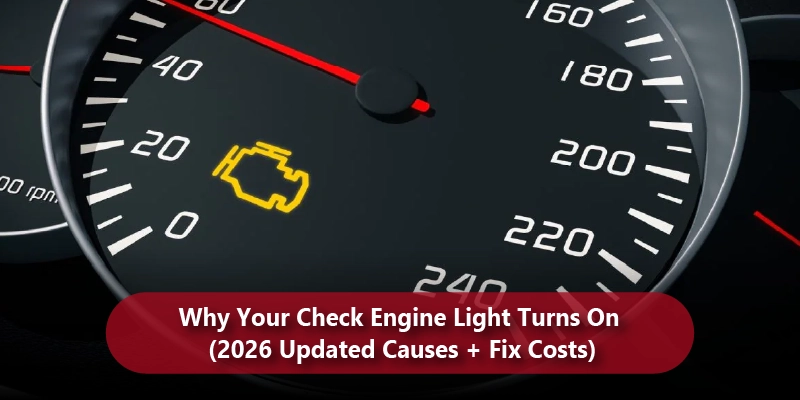
The check engine light in 2026 is triggered by sensor faults, emissions issues, or software errors in modern ICE, hybrid, and EV systems.
The check engine light also known as the Malfunction Indicator Lamp, has evolved significantly in 2026. What was once a simple warning for loose gas caps or ignition faults is now a sophisticated alert system tied to advanced diagnostics, software ecosystems, and electrified powertrains.
With the rise of hybrid vehicles, electric vehicles, and software-defined cars, the CEL is no longer limited to traditional engine problems. It now monitors everything from emissions systems to battery thermal management and even over-the-air software updates.
Understanding why your check engine light turns on in 2026 is essential not just to avoid costly repairs but to maintain vehicle performance, efficiency, and long-term reliability.
Why Is Your Check Engine Light Turning On in 2026?
Modern vehicles rely on complex onboard diagnostics systems such as OBD-II evolving toward OBD-III, where multiple sensors continuously communicate with the Engine Control Unit. When any system operates outside predefined parameters, the ECU triggers the check engine light.
Unlike older vehicles, where issues were mostly mechanical, 2026 models show a clear shift toward:
- Sensor-based failures
- Emissions system inefficiencies
- Software and calibration errors
- Electrification-related faults
For example, a slight imbalance in air-fuel ratio, a failing thermal sensor, or even a failed software update can trigger the same warning light.
Common Check Engine Light Issues in 2026
In 2026, technicians report that CEL triggers are increasingly linked to electronic and software systems rather than purely mechanical failures.
1. Oxygen Sensor Failure
The oxygen sensor plays a critical role in regulating the air-fuel mixture. When it fails, fuel efficiency drops, emissions increase, and engine performance suffers.
2. Catalytic Converter Problems
A failing catalytic converter is one of the most expensive issues. It often results from prolonged neglect of smaller problems like misfires or sensor failures.
3. Mass Air Flow Sensor Issues
The MAF sensor measures incoming air to optimize combustion. A faulty unit can cause hesitation, stalling, or rough acceleration.
4. EVAP System Leaks
This system ensures that gasoline vapors are sealed and redirected instead of being emitted. Even a minor leak like a loose gas cap can trigger the CEL.
5. Software and OTA Update Errors
Modern vehicles rely heavily on software. A failed or incomplete update can trigger phantom warning lights without any physical defect.
6. EV and Hybrid System Alerts
Electric and hybrid vehicles use the CEL to indicate issues such as:
- Battery cooling system faults
- High-voltage system irregularities
- Charging system inefficiencies
Repair Costs for Check Engine Light Issues in 2026
Repair costs vary significantly depending on whether the issue is minor or complex. For drivers focused on durability and lower ownership costs, our detailed list of the Most Reliable SUVs for 2026 highlights the best options.
| Issue | Estimated Cost (2026) |
| Loose/Damaged Gas Cap | $15 – $35 |
| Oxygen Sensor Replacement | $250 – $450 |
| Ignition Coils & Spark Plugs | $300 – $600 |
| EV Thermal Sensor | $400 – $900 |
| Catalytic Converter Replacement | $1,200 – $3,500 |
In 2026, a growing percentage of CEL triggers are linked to software anomalies, meaning some issues can be resolved through updates rather than hardware replacements.
What Actions to Take If Your Check Engine Light Is On
Ignoring the check engine light is one of the most common and costly mistakes drivers make. However, reacting appropriately can prevent serious damage.
Immediate Actions
If the light appears, start by observing its behavior.
- A continuous light suggests a manageable issue that doesn’t require immediate action.
- A flashing warning light suggests a high-risk problem that demands immediate inspection.
If the light is blinking, it often indicates an engine misfire that could damage the catalytic converter.
Practical Steps
Instead of guessing, follow a systematic approach:
- Make sure the fuel cap is firmly tightened to prevent leaks.
- Scan the vehicle with an OBD-II tool to identify the fault code.
- Monitor vehicle performance for symptoms like rough idling or reduced power.
- Book a diagnostic check with a professional if the warning remains.
Modern Bluetooth scanners make it easy to diagnose issues directly from your smartphone, making early detection more accessible than ever.
Why Immediate Diagnosis Matters
Addressing a check engine light early offers significant long-term benefits.
Prevents Expensive Repairs
Small issues, such as a faulty sensor, can escalate into major failures if ignored.
Maintains Vehicle Efficiency
Even minor faults can reduce fuel economy or battery efficiency.
Protects Resale Value
A vehicle with unresolved warning codes will significantly lose value in the used car market.
Ensures Compliance
Many regions require emissions testing, and a CEL can automatically fail.
Common Mistakes Drivers Make
Despite increased awareness, many drivers still mishandle CEL warnings.
Ignoring the Warning
Assuming the issue is minor can lead to severe damage over time.
Resetting Codes Without Fixing the Problem
Clearing the light does not resolve the underlying issue, and it will return.
Misjudging Software Errors
While some alerts may be software-related, not all are harmless. Proper diagnosis is essential.
DIY Repairs on EV Systems
High-voltage systems require specialized tools and training. Handling repairs without the right expertise can lead to serious hazards.
The Role of Advanced Diagnostics in 2026
The automotive industry is transitioning toward predictive diagnostics, where vehicles can:
- Detect issues before failure occurs
- Send alerts to mobile apps
- Schedule service automatically
OBD-III systems are expected to expand real-time monitoring and remote diagnostics, making vehicle maintenance more proactive than reactive.
Frequently Asked Questions
Why does the check engine light come on in 2026?
It activates when sensors detect faults in emissions, engine performance, or vehicle software systems.
Can electric vehicles have a check engine light?
Yes, it indicates issues in battery systems, cooling, or electronic control units.
How much does it cost to fix a check engine light in 2026?
Costs range from $20 for minor fixes to over $3,000 for major component replacements.
Is it safe to drive with the check engine light on?
A steady light is usually safe short-term, but a flashing light requires immediate attention.
Can software issues trigger a check engine light?
Yes, failed updates or system glitches are a growing cause in modern vehicles.
Key Takeaways
- Check engine lights in 2026 are increasingly driven by sensors, software, and electrification systems.
- A steady light indicates a manageable issue, while a flashing light requires immediate action.
- Early diagnosis prevents expensive repairs and performance degradation.
- Modern diagnostic tools make it easier for drivers to identify problems quickly.
- Software-related triggers are becoming more common alongside traditional mechanical faults.
Get More Updated Automotive Insights at Askaboutcars!
