

Key Takeaway

This blog examines the UK’s 2030 petrol and diesel car ban and what it means for drivers, manufacturers, and the wider automotive ecosystem. It breaks down key timelines, explains which vehicles are affected, clarifies the role of hybrid cars, and explores why the Zero Emission Vehicle mandate was introduced. The article also assesses the readiness of the UK’s charging infrastructure and analyses how used car values are likely to evolve during the transition. Together, it provides a comprehensive, fact-based overview of whether the UK is truly prepared for a zero-emission future.
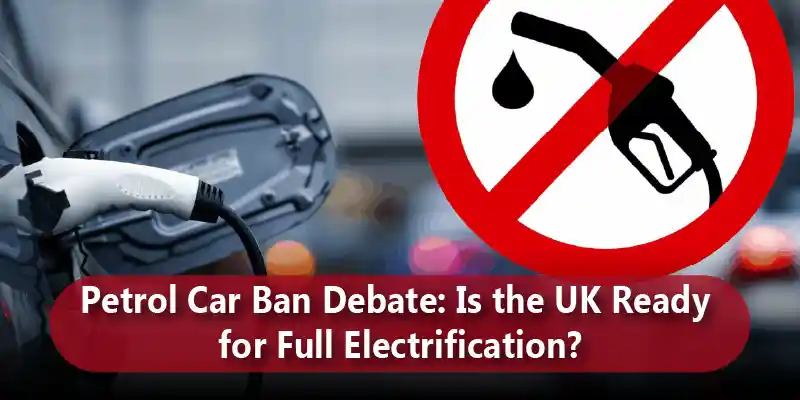
The UK is currently navigating one of the most significant shifts in automotive history. With the reinstatement of the 2030 deadline for the UK petrol car ban, drivers, manufacturers, and infrastructure providers are racing to align with a zero-emission future. But as the petrol car phase out UK gathers pace, many are questioning if the country is truly prepared.
When are petrol cars banned in the UK?
The sale of new pure petrol and diesel cars is scheduled to end in 2030. This policy is designed to ensure that the vast majority of vehicles on the road are zero-emission by the time the UK reaches its 2050 Net Zero target. The 2030 petrol diesel ban UK specifically targets pureinternal combustion engines, meaning any car that relies solely on a tank of fuel without an electric motor will disappear from showrooms.
Key features of the 2030 timeline:
- New Sales Only: The restriction applies exclusively to brand-new registrations.
- Fuel Availability: Petrol and diesel will remain available at pumps for decades to support the existing fleet.
- Manufacturing Shift: Major brands like Volvo and Ford have already committed to being electric-only in Europe by this date.
Are hybrid cars allowed in the UK after the ban?
Yes, hybrid cars are allowed in the UK until the final 2035 cutoff. The UK petrol car ban includes a bridge period between 2030 and 2035. During these five years, manufacturers can continue to sell new hybrid electric vehicles and plug-in hybrids. This allows the EV transition UK to happen in stages rather than all at once.
Current hybrid regulations:
- Mild Hybrids: These are generally excluded from the 2035 extension as they cannot drive significant distances on electric power alone.
- PHEV Advantage: Plug-in hybrids are expected to remain popular for long-distance drivers during the early 2030s.
- The 2035 Hard Limit: From 2035, the UK EV ban becomes absolute for all new cars with an exhaust pipe.
Why was the UK zero emission vehicle mandate introduced?
To guarantee a steady supply of electric vehicles and prevent market stagnation. The UK zero emission vehicle mandate is the legal engine driving the change. It forces car brands to meet strict sales targets or face heavy fines up to £15,000 per non-compliant vehicle. This ensures that the UK electric car mandate translates into actual cars on the road.
Impact on the car market:
- Increased Choice: Manufacturers are launching more affordable EV models to ensure they hit their percentage targets.
- Price Competition: Meeting the 2026 EV sales target of about 33% is driving manufacturers to lower entry barriers with discounted and flexible lease options..
- Infrastructure Pressure: The mandate provides a clear roadmap for charging companies, showing exactly how many EVs will need power each year.
Is the charging network ready for the UK EV ban?
Public charging is expanding at record speeds, though charging deserts remain. For the EV transition UK to succeed, drivers need confidence that they can refuel as easily as they do today. In 2025, the UK added over 14,000 new public chargers, with a heavy focus on ultra-rapid hubs at motorway service stations.
Status of the charging network:
- Local Authority Schemes: Grant-backed council programmes are increasing access to on-street charging for homes without driveways.
- Grid Stability: The National Grid has confirmed it can handle the increased load, provided that smart charging at off-peak times becomes the norm.
What will happen to used car values during the petrol car phase out UK?
Used petrol and diesel cars are expected to hold their value well in the short term. Because the UK petrol car ban only hits new car sales, the demand for used ICE vehicles may actually increase as 2030 approaches. Many buyers who are not ready for an EV will look to the second-hand market for their next vehicle.
Used market trends:
- Supply Shortage: As new petrol cars stop being made, high-quality used models may become rare commodities.
- EV Depreciation: Currently, some used EVs depreciate faster than petrol cars, making them an excellent bargain for second-hand buyers.
- ULEZ Compliance: Most petrol cars made after 2005 are already compliant with low-emission zones, ensuring their long-term usability in cities.
Final Thoughts: UK Petrol Car Ban Without Challenges
The UK’s 2030 petrol and diesel car ban represents a decisive policy shift rather than an overnight transformation. While the direction of travel toward zero-emission mobility is now firmly set, the success of the transition will depend on execution rather than ambition alone. Manufacturers are responding with expanded EV line-ups, charging infrastructure is scaling rapidly, and regulatory frameworks like the Zero Emission Vehicle mandate are ensuring momentum remains strong.
However, readiness remains uneven. Charging access, affordability, consumer confidence, and regional infrastructure gaps continue to shape public perception. The five-year hybrid transition period offers critical breathing space, allowing drivers and industries to adapt gradually rather than abruptly. In parallel, the used car market is likely to play a stabilising role, giving consumers flexibility as technology and infrastructure mature.
Ultimately, the petrol car phase out in the UK is less about banning vehicles and more about accelerating systemic change. For drivers, the coming decade will be defined by choice, adaptation, and timing. For policymakers and industry leaders, the challenge is ensuring that the path to Net Zero is practical, inclusive, and economically sustainable.
Frequently Asked Questions
There is no ban on owning or driving a petrol car. The UK petrol car ban only stops the sale of new models. You can drive your current car until it is no longer roadworthy.
No. Both new petrol and diesel cars face the same 2030 deadline. However, diesel car ban date UK discussions often mention that diesel vans have slightly more flexibility in certain weight categories.
No. After 2035, the UK EV ban requires all new cars sold to be 100% zero-emission at the tailpipe.
The UK electric car mandate often leads to better deals on new EVs as manufacturers try to hit their sales quotas to avoid fines.
Petrol stations will gradually evolve. Many are already adding high-speed EV charging bays, and while fuel will be available for decades, the number of petrol pumps may eventually decrease as the EV transition UK nears completion.
Join the conversation at Ask about cars for all types of car hacks and maintenance tips.
For More Car-Related Blogs:
UK Maintains Ban on New Petrol & Diesel Cars Despite EU Reversal — What Drivers Need to Know
Top Used Cars in the UK for 2026 (Best Value & Reliability Picks)