

Quick Insights before you Read
How much have UK car repair prices risen since Brexit?
Around 25%–40%, depending on the brand. Import duties, border checks, and a weaker Pound have permanently raised repair costs.

Why are car parts more expensive in the UK after Brexit?
Logistics delays and Rules of Origin tariffs. Extra paperwork and compliance costs lead to increased distributor pricing.
Is Brexit still affecting UK car servicing in 2026?
Yes, Higher labour costs and longer parts delivery times are now structural issues.
Has Brexit increased MOT costs?
Repair costs have increased, not the test fee. Replacement parts needed after failures are significantly more expensive.
Are EV maintenance costs impacted by Brexit?
Battery and software components often face up to 10% tariffs under stricter Rules of Origin
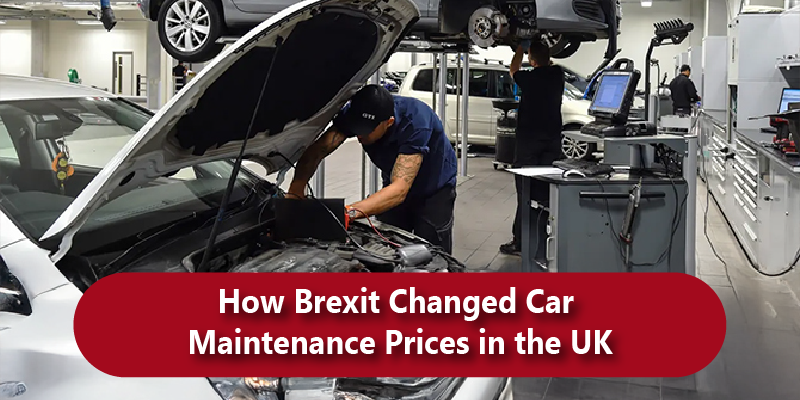
If you have taken your car in for a check-up lately, you’ve probably noticed the invoice looks a bit different from how it used to be. It’s not just your imagination; the way we keep our cars on the road in Britain has undergone a massive shift. As we head towards 2026, the conversation around Brexit car maintenance costs in the UK has evolved from speculation into a daily reality for millions of drivers.
Why do UK car repair prices after Brexit feel so much higher?
Friction. Before the UK left the EU, our garages operated on a just-in-time model. A mechanic in Birmingham could order a clutch from a warehouse in Belgium at 4:00 PM and have it on the workbench by the next morning. Today, that same part has to navigate customs declarations, VAT hurdles, and potential border inspections.
While the zero-tariff headlines were comforting, they didn’t account for the non-tariff barriers. The administrative cost of moving a pallet of brake discs across the Channel has spiked. When a distributor spends more on paperwork and logistics, those costs eventually land on your final bill. This is the primary driver behind the UK car repair prices after Brexit. We see today that we aren’t just paying for the metal; we’re paying for the border it crossed.
What is the long-term Brexit impact on UK car servicing?
By 2026, the Brexit impact on UK car servicing will have manifested in two main ways: parts and people. On the parts side, the UK remains a net importer of automotive components. Whether it’s a German-made alternator or a French-made fuel pump, the supply chain is simply more fragile than it was.
On the people side, the skills gap has become a permanent fixture of the industry. Many experienced European technicians who previously staffed UK workshops returned to the continent post-Brexit. This labor shortage has forced garage owners to hike wages to attract local talent, which directly increases the hourly labor rate you see on your quote. When you combine more expensive parts with higher labor costs, the Brexit effect on car service prices UK becomes very clear.
How has the car parts cost increase UK Brexit affected older vehicles?
If you’re driving a car that’s more than five years old, you might be feeling the pinch even more. Owners of older vehicles often rely on the aftermarket parts made by third-party companies rather than the original manufacturer. A significant portion of these high-quality aftermarket parts comes from European hubs.
The car parts cost increase due to the UK Brexit means that budget repairs are no longer as cheap as they once were. Even simple consumables like oil filters, spark plugs, and wiper blades have seen a steady price creep. In 2026, many UK drivers are finding that the cost of maintaining an older, EU-made car is starting to rival the monthly cost of a new car lease.
Why is everyone talking about UK vehicle maintenance costs 2026 Brexit trends?
This year is a turning point because of the Rules of Origin regulations. For a car to be traded tariff-free between the UK and the EU, a certain percentage of its value must be created locally. In 2026, these thresholds have become stricter, especially for Electric Vehicles and high-tech components.
If a replacement battery or a complex sensor doesn’t meet these local content rules, it can be hit with a 10% tariff. This is why UK vehicle maintenance costs 2026 Brexit reports often highlight a widening gap between older mechanical cars and newer, tech-heavy models. The more complex the part, the more likely it is to have a complicated and expensive import story.
Final Thoughts: A New Reality for UK Drivers
By 2026, Brexit’s impact on UK car maintenance is no longer a temporary disruption, it is the new operating environment. Higher repair bills are being driven by structurally higher parts costs, ongoing labour shortages, and stricter trade rules that disproportionately affect modern, technology-heavy vehicles.
For UK drivers, this shift demands a change in mindset. Preventive maintenance, longer ownership planning, and realistic budgeting are now essential rather than optional. The era of cheap, fast EU-sourced repairs has ended, replaced by a system where every component carries the cost of compliance, logistics, and scarcity.
Ultimately, understanding these forces is the first step toward managing them. While Brexit has reshaped the economics of car ownership in Britain, informed decisions about servicing, vehicle age, and repair timing can still help drivers stay ahead of rising costs in 2026 and beyond.
Most Common Questions
Yes. European brands like Volkswagen, BMW, and Renault often see more direct price fluctuations because their parts supply chains are heavily integrated with the EU. Brands with more localized UK manufacturing or those sourcing heavily from Asia have seen slightly different price trajectories.
It’s highly unlikely. The new customs infrastructure, labor market shifts, and inflation have created a new “baseline” for pricing. While the 2026 market is more stable than the chaotic years of 2021-2023, the structural costs are here to stay.
Mobile mechanics often have lower overheads than big dealerships, which can save you money on labor. However, they still have to buy the same parts from the same distributors, so they are still subject to the general car parts cost increase due to the UK Brexit.
If you need a specialized repair or a modular battery fix in 2026, the parts are often imported from specialized EU facilities, making them sensitive to current trade arrangements.
Preventative maintenance is more important than ever. Because parts take longer to arrive and cost more, fixing a small issue before it causes a breakdown is the most effective way to keep your long-term costs down.
For more hacks, DIY maintenance guides, or the latest car tips, join the conversation at Ask about cars.
For More Related Blogs:
Own a Classic British Sports Car? 7 Maintenance Tips Every UK Driver Should Know
Top Used Cars in the UK for 2026 (Best Value & Reliability Picks)
Electric Cars in UAE: Charging Stations, Costs & What to Expect in 2026