

The UK’s ambitious push towards an all-electric future is currently at a critical crossroads. A confluence of new regulations, most notably the UK ZEV mandate 2025 changes and the phasing out of tax breaks, has sparked a fierce debate about the stability and trajectory of the electric vehicle industry. While the government aims to solidify the nation’s green transition, key players, including the EV giant Tesla, have publicly and privately voiced significant concerns.

This comprehensive blog will unpack the core regulatory shifts, analyse the controversial end of the UK EV VED exemption, explore the pressure points for manufacturers navigating ZEV mandate flexibility, and detail the significant future changes to UK electric car tax. Most importantly, we’ll examine why Tesla, a company built on the success of the EV transition, is cautioning the UK government about introducing loopholes that could suppress battery electric vehicle supply and risk the country’s climate goals. The stakes are immense, impacting everything from the cost of a new car to the UK’s ability to hit its net-zero targets.
The Zero Emission Vehicle Mandate: An Ambitious Pace Setter
The Zero Emission Vehicle mandate, introduced in the UK, is one of the world’s most aggressive policies designed to force the automotive industry’s hand toward electrification. The mandate dictates that a rising percentage of new cars and vans sold by manufacturers must be zero-emission each year, leading to 100% ZEV sales by 2035.
The UK ZEV Mandate 2025 Changes and The Pressure on Manufacturers
The initial targets were challenging, but the focus quickly shifted to the flexibility introduced by the government. The UK ZEV mandate 2025 changes brought with them certain flexibilities designed to support the transition for manufacturers. These included a decrease in fines for non-compliance and the ability to convert CO2 savings from non-ZEV fleets (like hybrids) into credits, effectively softening the immediate pressure. Furthermore, a car-to-van credit transfer mechanism was introduced, acknowledging the greater difficulty in electrifying the commercial van market.
Tesla Speaks Out: Against Flexibilities
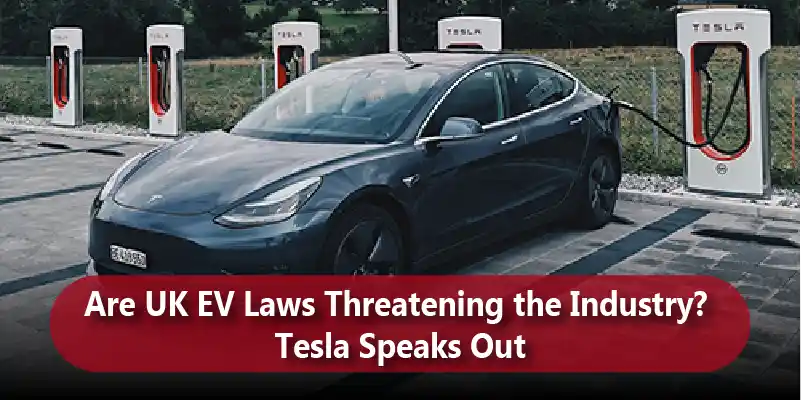
This is where the voice of Tesla becomes most critical. In submissions to government consultations, Tesla privately and publicly warned that introducing these “flexibilities” would damage the EV market. As a company that only produces ZEVs, Tesla’s business model benefits from a strict, uncompromised ZEV mandate that compels its competitors to accelerate their EV strategies.
Tesla argued that the weakening of rules, which allows carmakers to sell more petrol and diesel cars via loopholes and jeopardises carbon reduction targets. Their position is clear: a softer mandate means less urgency for legacy automakers, resulting in fewer affordable EV models being brought to the UK market and, consequently, lower overall EV adoption. The debate highlights a deep division: those manufacturers struggling with profitability on early EV models lobbying for ZEV mandate flexibility, versus the EV pure-plays, like Tesla, who advocate for maintaining a strict, high-pressure trajectory.
The End of EV Tax Breaks: Financial Headwinds
Simultaneously, the financial landscape for EV ownership in the UK is undergoing a profound change, removing some of the key incentives that have driven early adoption.
The UK EV VED Exemption End
This change means the annual running cost of an EV is increasing. For many, the road tax was a tangible, annual financial benefit that offset the higher upfront purchase price of an electric car. Its removal, while understandable as a means for the Treasury to recoup lost fuel duty revenue, eliminates a significant psychological and financial incentive for prospective buyers.
The Threat Perception: A Matter of Pace and Predictability
The core threat to the EV industry, as argued by Tesla and environmental groups, is not the regulation itself, but the lack of commitment and the mixed signals these changes send to the market.
The Manufacturer Divide
The introduction of ZEV mandate flexibility allows manufacturers can be seen as a retreat from the initial, stricter policy. This flexibility rewards slow movers and punishes those who invested heavily early on.
- The Laggards: Manufacturers with a high proportion of UK factory production, like Nissan and BMW, have claimed the original mandate forced them to sell EVs at a loss, thus damaging investment. The flexibilities offer them a crucial safety net and more time to transition their product lines.
- The Leaders: Tesla and other EV-focused brands argue that the primary purpose of a mandate is to force the market, which it was doing effectively by stimulating a surge in new EV registrations in 2024. Undermining this push will simply reduce the supply of new EVs, particularly in the private buyer market, where the uptake has been challenging.
The Consumer Impact
For the consumer, the simultaneous removal of tax benefits complicates the financial calculation of switching to electric. The UK EV VED exemption end, and the implementation of new road taxes increase the total cost of ownership, just as the market needs a sustained surge in private buyers.
While the government has extended the Electric Car Grant, the overall trajectory is clear: the era of significant government subsidies and tax incentives for EVs is winding down. This can create a ‘wait-and-see’ attitude among consumers, leading to reduced demand just when manufacturers, driven by the ZEV mandate, are being pushed to ramp up supply. This disconnect between forced supply and softened demand is the market’s greatest risk.
Wrapping Up: The Path Forward of Balancing Goals
The UK government is caught between the need to fund public services and the need to meet legally binding climate targets. However, the industry’s response, highlighted by Tesla’s warnings, suggests the current balance is precarious. For the UK to remain a leader in the EV transition, it needs to ensure:
- Policy Certainty: The market thrives on predictable, long-term policy signals. Weakening the ZEV mandate sends a message of hesitation, which can stall billions in private investment in gigafactories and charging infrastructure.
- Infrastructure Priority: The rise in EVs, driven by the mandate, must be matched by a corresponding, reliable, and affordable public charging network. The government has pledged funds, but execution is key. Mercedes-Benz, for instance, has called for a reduction in VAT on public charging to match the 5% paid on home electricity.
- Used Market Support: As Tesla suggested, support for the used EV market is crucial. A healthy second-hand market makes the initial purchase of a new EV more financially secure for the first buyer, helping to keep the supply chain moving.
Ultimately, the goal is to shift the market’s focus from regulation and incentives to product appeal, making EVs cheaper, better, and more convenient than petrol cars. The current suite of laws risks hindering that final stage of the transition by simultaneously introducing ZEV mandate flexibility for manufacturers and removing key consumer financial benefits. The coming years will be a true test of whether the UK can weather the storm of regulatory uncertainty and deliver on its zero-emission promises.
Frequently Asked Questions
The UK ZEV mandate is a law requiring manufacturers to sell a rising percentage of zero-emission vehicles each year. The UK ZEV mandate 2025 changes introduced new flexibilities, while this helps some brands with their targets, critics, including Tesla, argue this weakens the pressure to bring new, affordable electric cars to the market, potentially slowing down the choice available to consumers.
The Expensive Car Supplement is an additional annual tax charge. From April 2025, new electric cars with a list price above £50,000 will be liable for this supplement for the first five years that the standard VED rate is paid.
The ZEV mandate flexibility, like extending the use of CO2 credits from hybrids, are controversial because it gives manufacturers an alternative way to comply without selling the mandated number of pure EVs. Tesla argued that these flexibilities would “suppress BEV supply” because they reduce the financial pressure on legacy automakers to quickly scale up their electric offerings.
Want to know which used EV models are the best value, or need advice on home charging hacks? Join the conversation at Ask about cars.
For More Related Blogs:
UK’s EV Market Surges — Is the ZEV Mandate Working?
BEVs Hit 25% of October Sales: Is the UK Finally Reaching Mass EV Adoption?
EV Boom in England: The Real Reasons Drivers Are Switching Faster,