

Scope of Analysis

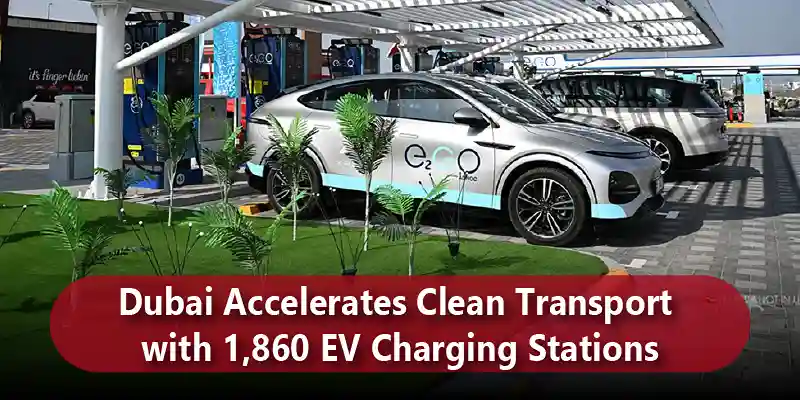
Dubai’s electric vehicle ecosystem has moved beyond early adoption and entered full-scale execution. With 1,860 EV charging points live by January 2026, the city now operates one of the most advanced and accessible charging networks globally. This blog examines how the Dubai EV chargers expansion, powered by DEWA, ADNOC, and public–private partnerships, is eliminating range anxiety, accelerating EV adoption, and reshaping energy consumption patterns across the UAE. From ultra-fast urban chargers to highway mega hubs and solar-integrated infrastructure, we break down what this transformation means for commuters, consumers, and the UAE’s Net Zero EV strategy.
Are you worried about range anxiety while driving an electric car in the UAE? You shouldn’t be. As of January 2026, the landscape of Dubai EV charging stations 2026 has undergone a massive transformation. With the official count hitting 1,860 charging points, Dubai is no longer just preparing for the future; it is living it.
This rapid Dubai EV chargers expansion is driven by the government’s commitment to the UAE Net Zero EV strategy, ensuring that every resident and visitor has seamless access to power.
Why is the Dubai EV Chargers Expansion Happening So Fast?
The surge in EV charging points in Dubai is a direct response to the skyrocketing adoption of eco-friendly vehicles. In the first half of 2025 alone, Dubai recorded over 40,000 new EV registrations. To prevent this, the DEWA EV Green Charger network was scaled up to provide 1,860 active points across the city.
The causes of this rapid growth include:
- Government Mandates: The Dubai Green Mobility Strategy 2030 requires a specific percentage of government fleets to be electric.
- Technological Shift: The introduction of superfast EV chargers in Dubai has reduced charging times from hours to minutes.
- Consumer Demand: Lower fuel costs and high-performance EV models have shifted public interest toward battery-electric vehicles.
The effects of this expansion are clearly visible:
- Zero Range Anxiety: Drivers can now travel from Jebel Ali to Deira without fearing a dead battery.
- Property Value Increase: Residential towers installing Dubai electric vehicle stations are seeing higher demand from eco-conscious tenants.
- Reduced Carbon Footprint: Over 276 million kilometers of green travel have been powered by DEWA since the program’s inception.
Also Read: Step-by-Step Guide to Pre-Purchase Inspection in Dubai
What are the Main Pillars of the DEWA EV Green Charger Network?
The DEWA EV Green Charger network is the backbone of the city’s sustainable transport. By early 2026, the network will have evolved into a multi-tier system designed to meet different user needs. It isn’t just about plugging in anymore; it’s about the speed and convenience of the Dubai EV charging stations 2026 infrastructure.
DEWA offers four distinct types of chargers:
- Ultra-Fast Chargers: Located at high-traffic zones and gas stations.
- Fast Chargers: Found in shopping malls and public parking lots.
- Public Chargers: Standard charging for long-duration parking.
- Wall-Box Units: Primarily for residential and private use.
How does this impact the daily commuter?
- Seamless Integration: You can find EV charging points in Dubai using the DEWA smart app or 14 other integrated digital platforms.
- Fast Registration: New users can gain access to the DEWA EV Green Charger network within one hour of vehicle registration.
- Interoperability: A unified tariff system across the UAE makes it easier to predict costs.
Also check: How to Save Money Charging Your EV at Home in 2025
How is the ADNOC EV Mega Hub in Dubai Changing Highway Travel?
One of the most significant milestones in UAE EV infrastructure growth is the inauguration of the ADNOC EV mega hub in Dubai. Located strategically at Saih Shuaib on the E11 highway, this facility is the sixth-largest superfast charging hub in the world.
Key features of the ADNOC Mega Hub:
- 60 High-Speed Points: Capable of delivering a 0-80% charge in 20 minutes.
- Coworking Spaces: Since the hub is three times larger than a standard gas station, it includes lounges where you can work while your car charges.
- Retail and Dining: High-end convenience stores and food outlets turn a charging stop into a lifestyle experience.
Why is this location critical?
- Intercity Link: It bridges the gap between Abu Dhabi and Dubai, making it the most important of all EV charging hubs on the UAE highways.
- Commuter Focus: It is specifically designed for the thousands of professionals who commute daily between the two emirates.
Is the UAE Net Zero EV Strategy on Track for 2026?
The UAE Net Zero EV strategy isn’t just a vision; it’s a measurable roadmap. The current density of Dubai EV charging stations in 2026 suggests the country is ahead of schedule.
What supports this strategy?
- Unified Tariffs: The government has rolled out a unified charging cost to ensure transparency for all users.
- Incentives: Free parking and Salik exemptions for EVs continue to drive adoption.
- Private Partnerships: Companies like Parkin have joined forces with DEWA to add hundreds of Dubai electric vehicle stations in public parking areas and residential communities.
Also Read: Driverless RoboTaxis Set for Phase 1 Rollout Across 65 Locations in Dubai
What Does the Future Hold for Dubai EV Charging Stations in 2026?
As we move deeper into 2026, the focus is shifting from quantity to quality. While having 1,860 points is impressive, the next phase of the Dubai EV chargers expansion focuses on smart-grid integration and AI-driven load management.
Upcoming trends in UAE EV infrastructure growth:
- V2G: Technology that allows your car to give power back to the grid during peak hours.
- Wireless Charging: Pilot programs for inductive charging pads in premium parking spots.
- Solar-Integrated Hubs: More EV charging points. Dubai will be powered directly by on-site solar panels, further reducing the carbon footprint.
Final Thoughts: Dubai’s EV Charging Revolution
Dubai’s EV charging infrastructure in 2026 represents more than an increase in charging points, and it reflects a system-level transition toward sustainable mobility. The combination of superfast urban chargers, highway mega hubs, and solar-powered integration has fundamentally removed the two biggest barriers to EV adoption: range anxiety and charging inconvenience.
The strategic expansion of EV charging hubs across UAE highways has reshaped consumer behavior, encouraging the uptake of electric SUVs and long-range EVs that were once considered impractical for intercity travel. At the same time, investment in ultra-fast chargers is indirectly reducing dependence on energy tied to fossil fuel refining, aligning infrastructure growth with the UAE’s broader Net Zero ambitions.
What sets Dubai apart is execution at scale. Unified tariffs, digital interoperability, fast user onboarding, and strong public vs private collaboration ensure that the charging network evolves in parallel with vehicle adoption, not after it. As the focus shifts toward smart grids, AI load balancing, V2G capability, and solar-integrated charging hubs, Dubai is no longer reacting to the EV future it is actively shaping it.
Frequently Asked Questions
You can find the highest density of Dubai EV charging stations in 2026 in Downtown Dubai, Dubai Marina, and along the E11 highway. The DEWA smart app provides a real-time map of all 1,860+ points.
While most superfast EV chargers in Dubai operate on a paid tariff, some malls and hotel partners offer complimentary charging for customers. However, DEWA’s official DEWA EV Green Charger network follows a standardized billing system.
The ADNOC EV mega hub in Dubai is three times larger than traditional stations and features 60 superfast stalls, coworking spaces, and retail outlets, making it a destination rather than just a stop.
Yes, the UAE Net Zero EV strategy benefits private owners through incentives like reduced registration fees, specialized green bank loans, and the rapid expansion of UAE EV infrastructure growth in residential areas.
Yes, the EV charging hubs on UAE highways are designed with universal connectors to ensure compatibility with almost all electric vehicle brands sold in the UAE.
Join the conversation at Ask about cars for car hacks and car tips.
Submit your blogs with us today!