


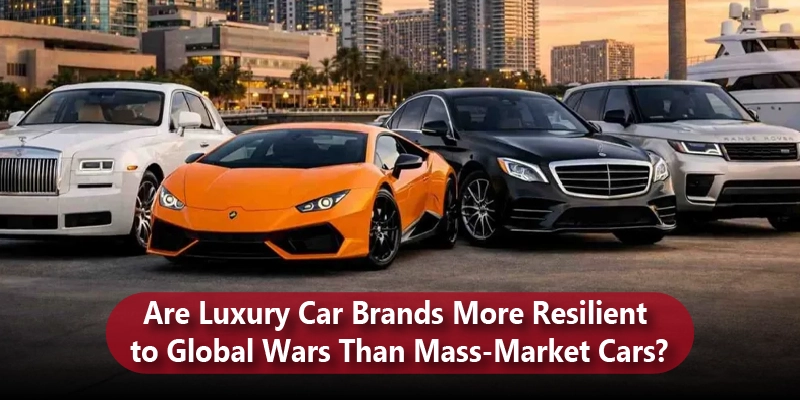
Luxury cars remain more resilient during wars due to affluent buyers, controlled supply, and stronger resale stability.
In periods of geopolitical instability, industries experience uneven impact. The automotive sector is particularly sensitive to fuel volatility, supply-chain disruption, semiconductor shortages, and shifts in consumer confidence. Yet when comparing luxury cars vs mass market during wars, historical data shows that premium brands tend to demonstrate stronger structural resilience.
Why Luxury Cars Show Greater Resilience During Conflicts
1. Affluent Buyer Immunity
Luxury brands primarily serve high-net-worth individuals. Unlike middle-income households, this segment is less sensitive to interest rate hikes, fuel price inflation, or temporary liquidity constraints. During uncertainty, wealth concentration often increases, indirectly supporting high-end asset purchases.
Brands such as Mercedes-Benz and Porsche have historically maintained strong margins even during macroeconomic stress because their customer base prioritizes brand prestige, exclusivity, and asset diversification.
Related Insights: Oil Price Volatility: What Ongoing Wars Mean for Petrol and Hybrid Car Demand in the UAE
2. Controlled Production & Supply Discipline
Mass-market automakers operate on volume-driven models. In times of crisis:
- Buyers delay purchases
- Financing approvals decline
- Used car supply increases
Luxury manufacturers, however:
- Produce in limited volumes
- Maintain waitlists
- Protect brand pricing power
This supply discipline prevents excessive depreciation and supports stronger resale values.
3. Luxury Cars as Moveable Wealth
During wars or global instability, certain tangible assets retain perceived store-of-value characteristics. Limited-edition models, rare trims, and iconic brands often behave more like collectible assets than depreciating commodities.
Mass-market vehicles typically flood the used market during downturns, accelerating price drops. Luxury vehicles, particularly scarce variants, face less distress selling.
How Wars Affect Each Segment
| Impact Factor | Mass Market Cars | Luxury Cars |
| Fuel Price Volatility | High sensitivity; demand declines | Moderate impact; buyers are less price-sensitive |
| Interest Rate Hikes | Financing drops sharply | Limited effect; more cash buyers |
| Supply Chain Disruption | Production halts impact volume | Lower volume reduces damage |
| Used Market Pressure | Oversupply causes depreciation | Limited supply supports resale |
| Raw Material Inflation | Price-sensitive customers resist hikes | Premium buyers absorb increases |
Pricing Behavior During Conflict
When wars disrupt global trade:
- Palladium, aluminum, and semiconductor costs rise
- Shipping insurance premiums increase
- Currency fluctuations intensify
Mass-market brands often struggle to pass these costs to buyers. Luxury brands, however, typically increase MSRP without severe demand erosion. In many cases, price hikes reinforce brand positioning rather than weaken it.
Frequently Asked Questions
Do luxury cars hold value better than economy models during wars?
Yes, due to limited supply and high demand, stability.
Why don’t luxury car prices fall sharply during global conflicts?
Production is controlled, and buyers are less price-sensitive.
Are mass-market cars more affected by wartime inflation?
Yes, financing sensitivity and cost pressures hit middle-income buyers harder.
Do raw material shortages increase luxury car prices?
Yes, and premium buyers often absorb those increases.
Key Takeaways
- Luxury cars demonstrate stronger resilience during wars due to affluent, less price-sensitive buyers.
- Mass-market vehicles face a sharper demand decline as middle-income consumers delay purchases amid inflation and rate hikes.
- Controlled production protects luxury resale values, while oversupply accelerates depreciation in economy models.
- Luxury brands sustain margins better by passing increased raw material and logistics costs to buyers.
- Mass-market automakers rely on volume, making them more vulnerable to supply-chain disruptions and financing slowdowns.
- Limited-edition and iconic luxury models can act as movable assets, offering relative value stability during uncertainty.
For More Car-Related Blogs:
How Middle East Tensions Could Disrupt New Car Prices in UAE in 2026
How Middle East Tensions Could Disrupt New Car Prices in UAE in 2026
For advertising, sponsored content, or brand collaboration opportunities on this platform, please visit us.