


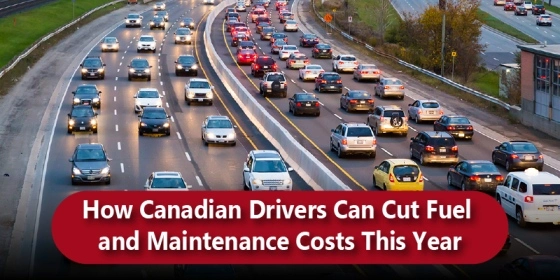
As a Canadian driver, you know the sting of rising prices at the pump and the inevitable cost of keeping your vehicle in top shape. From fluctuating gas prices to the unforgiving Canadian climate demanding extra car care, vehicle ownership can feel like an endless expense.This year, unlock significant savings by mastering key strategies to reduce your fuel consumption and minimize service expenses. We’ll show you exactly how to save on gas in Canada and discover cheap car maintenance tips in Canada that will keep more money in your wallet.

Fueling Your Savings – Proven Strategies for Cheaper Driving
The most direct way to cut vehicle costs in Canada is to attack your biggest variable expense: gasoline. Practicing fuel-efficient driving habits, Canadaians can save hundreds of dollars off your annual fuel bill.
1. Master Fuel-Efficient Driving Habits
Aggressive driving is the enemy of fuel economy. By adopting a smoother, more deliberate driving style, you’ll see an immediate difference. These are the best ways to save gas in Canada
Smooth Acceleration and Braking: Think of your gas and brake pedals as sensitive instruments. Quick acceleration and hard braking significantly increase fuel use in city traffic, sometimes by as much as 40%. By accelerating gradually and reading the road ahead, drivers can ease to a stop while maintaining momentum and saving fuel.
- Maintain a Steady Speed: On the highway, use cruise control when appropriate to keep a consistent speed. Studies shows that lowering your highway speed from 120 km/h to 100 km/h can reduce fuel consumption by up to 20%.
- Avoid Excessive Idling:During Canada’s cold winters, it may seem necessary to let your car idle to warm up, but modern engines require very little warm-up time. If you expect to be stopped for more than 60 seconds, switching off the engine can save fuel, as just 10 minutes of idling wastes at least one-fifth of a litre.
- Use Engine Block Heaters in Winter: Proper use of an engine block heater in extreme cold can improve fuel economy by up to 10% on short trips by helping the engine reach its optimal operating temperature faster. Use a timer to switch it on just two to four hours before driving not overnight to save on electricity.
2. Smart Pumping and Planning
It’s not just how you drive; it’s also where and when you fill up, and how you plan your errands.
- Plan and Combine Trips: Consolidate your daily or weekly errands into one longer loop instead of making multiple short round trips. Short trips prevent your engine from reaching its peak operating temperature, making it less fuel-efficient.
- Shop Around for the Lowest Prices: Gas prices can vary significantly between stations and neighbourhoods. Use gas price apps to find the best deal on fuel near you. Taking advantage of rewards programs from stations or credit cards that offer cents-per-litre savings is an excellent fuel-saving tip for Canadian drivers.
- Lighten the Load and Reduce Drag: Remove unnecessary heavy items from your trunk and cabin. For every extra 25 kg, you can add approximately 1% to your fuel consumption. If you have a roof rack or cargo carrier that isn’t being used, take it off as it creates aerodynamic drag, forcing your engine to work harder.
- Use Air Conditioner Wisely: Air conditioning puts a load on the engine and can increase fuel use by up to 20% in city driving. At lower speeds, open the windows. At high speeds, open windows create significant drag, so using the A/C sparingly might be the more fuel-efficient choice.
Proactive Maintenance to Save Money on Car Repairs in Canada
Neglected maintenance almost always leads to costly repairs down the road. Adopting a proactive approach to your vehicle’s health is one of the most effective strategies to how to reduce car maintenance costs in Canada.
1. The Critical Role of Tires
Your tires are your vehicle’s only contact with the road, and they play a massive role in both safety and fuel economy.
- Check Tire Pressure Monthly: Underinflated tires create greater rolling resistance, making your engine burn more fuel. A tire under-inflated can increase fuel consumption by 5%. Check your tire pressure when the tires are cold, you can find the correct pressure on a sticker inside the driver’s side doorjamb, not the tire sidewall.
- Rotate and Balance: Rotating your tires every 5,000 to 7,500 km promotes even wear, extending their lifespan and reducing the need for premature replacement. This is a fundamental, cheap car maintenance tip in Canada.
2. Stay on Top of Fluids and Filters
These simple, low-cost services prevent high-cost engine damage.
- Routine Oil Changes: This is arguably the most important of all cheap car maintenance tips in Canada. Skipping oil changes allows sludge to build up, causing excess friction and wear on vital engine components, eventually leading to devastating and expensive failure. Stick to your manufacturer’s recommended schedule, and consider using synthetic oil, which lasts longer and offers better protection in extreme Canadian temperatures.
- Replace Air and Cabin Filters: When an engine air filter becomes dirty, it limits the oxygen available for combustion, leading to higher fuel usage and reduced engine performance, with fuel efficiency potentially dropping by up to 10%. At the same time, a clean cabin air filter ensures fresher air inside the vehicle and supports efficient heating and cooling performance. These are often easy and inexpensive to replace yourself.
3. DIY & Smart Repair Strategies
You don’t need to be a master mechanic to save money on car repairs in Canada. Several basic tasks can be managed without professional assistance.
- Do Simple Checks Yourself: Learn to check your oil, washer fluid, engine coolant, and battery terminals regularly. Cleaning battery corrosion whether it is in white or bluish powder with a simple baking soda and water mixture can prevent starting problems and extend battery life.
- Don’t Ignore Warning Lights: A check engine light, even if it seems minor, should be addressed immediately. A diagnostic scanner is an affordable tool you can buy to read basic error codes yourself, giving you an idea of the problem before you go to the mechanic. This prevents small, inexpensive issues from turning into major breakdowns.
- Shop Around for Repairs: For larger jobs, get quotes from both dealerships and reputable independent repair shops. Independent mechanics often have lower labour rates. Look for mechanics with certifications and strong local reviews.
Wrapping Up: Take the Wheel of Your Vehicle Expenses
Rising fuel prices and the increasing cost of vehicle ownership continue to place pressure on Canadian drivers. However, with a proactive and strategic approach, it is possible to regain control over these expenses. By adopting fuel-efficient driving habits, staying consistent with cost-effective maintenance practices, and making informed ownership decisions, drivers can significantly reduce fuel consumption and long-term repair costs. Each small change contributes to meaningful savings, ensuring that smarter driving and practical maintenance lead to a more affordable and sustainable driving experience across Canada.
Most Common Questions
1. What are the single best ways to save gas Canada on a daily commute?
The single best ways to save gas Canada during your commute is to adopt smooth driving habits: avoid rapid acceleration and hard braking, maintain a steady speed, and utilize cruise control on the highway. Also, plan your route to avoid traffic congestion and excessive idling.
2. Is premium gasoline a good fuel saving tip for Canadian drivers?
No. Using high-octane or premium gasoline is only beneficial if your vehicle’s owner’s manual specifically requires it. If your car is designed for regular unleaded, using premium is simply a waste of money and will not improve your fuel economy or performance. This is a critical factor in how to save on gas in Canada.
3. How often should I perform maintenance to reduce car maintenance costs Canada?
Following your vehicle manufacturer’s recommended maintenance schedule is the key to preventing major, expensive repairs. Generally, this means an oil change every 5,000–12,000 km and regular checks of fluids, filters, and tires. Consistent, minor maintenance is the best way to save money on car repairs Canada.
4. Besides driving, what is the best way to cut vehicle costs in Canada?
Outside of driving, the best way to cut vehicle costs in Canada is to shop smart for services and parts. Get multiple estimates for repairs, look for deals on routine services like oil changes, and consider reliable, lower-cost independent mechanics over dealerships for out-of-warranty work.
5. Can I do my own maintenance and still maintain my warranty?
Yes, in most cases, you can perform your own routine maintenance or have it done at a non-dealership shop without voiding your warranty, as long as you use the correct, high-quality parts and keep detailed records and receipts. Always check the terms of your specific vehicle warranty, but proper maintenance is a core cheap car maintenance tip Canada.
For more hacks, tips, and to join the conversation at ask about cars!
For More Related Blogs:
How Hybrid Cars Are Changing the Way We Drive and Save Fuel
5 Fuel-Efficient Driving Habits That Actually Work in Birmingham