


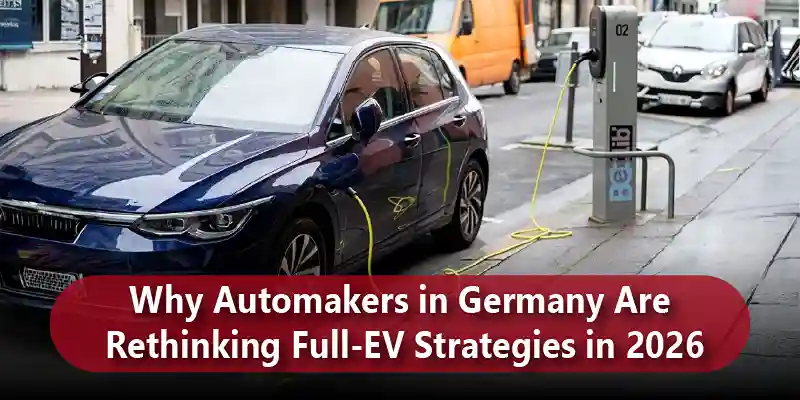
Germany automakers are adopting technological neutrality because a 27% drop in sales, high domestic production costs, and a softening of the EU’s 2035 combustion ban have made a purely electric path financially risky.

As we move through 2026, the Germany EV strategy 2026 has undergone a massive pivot. For the last five years, German car manufacturers like Volkswagen, BMW, and Mercedes-Benz raced toward an all-electric future. However, the EV market in Germany has hit a significant plateau. Between the removal of the EV subsidy and the rise of affordable Chinese competitors, the German auto industry news is now dominated by talk of multi-pathway engineering keeping internal combustion and hybrid tech alive much longer than originally planned.
Why Is the Germany EV Strategy 2026 Shifting Toward Hybrids?
The primary driver is the flexibility mandate. German car manufacturers realized that betting 100% on battery-electric vehicles left them vulnerable to fluctuating energy prices and a slow-moving public charging rollout. By 2026, the strategy is no longer EV or bust,but rather EV and Hybrid.
The Strategic Shift:
- Production Re-tooling: Instead of building EV-only factories, brands are investing in flexible lines that can swap between gas, hybrid, and electric models based on real-time weekly demand.
- Middle-Market Focus: Germany automakers are moving away from €100,000 electric luxury cars to focus on sub-€30,000 models to combat the electric vehicle slowdown in Europe.
- Engine Modernization: Contrary to 2022 projections, German car manufacturers are reinvesting in highly efficient Euro 7-compliant engines to bridge the gap for long-distance drivers.
Also Read: Are BMW and Mercedes Losing Ground to Asian Rivals?
What Are the Key Benefits of a Balanced Portfolio?
A diversified approach helps stabilize the German auto industry news cycle and protects the economy from the volatility seen in the EV market in Germany.
- Financial Stability: Keeping ICE and hybrid sales alive isn’t about the past and it’s about funding the future of solid-state battery innovation.
- Global Competitiveness: While the electric vehicle slowdown in Europe is real, other markets like the US and parts of Asia still have high demand for hybrids.
- Consumer Trust: Offering a hybrid vs EV Germany choice respects the reality of renters who lack home-charging access.
What Are the Main EV Adoption Challenges in Germany?
Despite major improvements in EV technology, structural and economic constraints continue to slow adoption in Germany.
Major Obstacles:
- The Subsidy Hangover: Without government cash, the price gap between a VW Golf and an ID.3 remains too wide for the average family.
- Grid Strain: Urban areas are struggling to upgrade local transformers to handle the surge in home wall-box chargers.
- Resale Value Panic: Uncertainty about battery longevity after 8 years has caused used EV prices to crater, making leasing more expensive.
Also Read: Top 10 Countries Leading the Electric Car Revolution
What Common Mistakes Are Automakers Correcting?
The automotive trends in Europe 2026 show a course correction for several high-profile errors made during the initial EV gold rush.
- Abandoning the Small Car: For years, German car manufacturers cut small, affordable models. Now, they are rushing to bring them back to stop Chinese brands from owning the entry-level segment.
- Over-Hyping Self-Driving: Brands focused too much on Level 4 autonomy while consumers just wanted better battery range and faster charging software.
- Fixed Exit Dates: Publicly committing to 2030 all-electric goals created a PR nightmare when market realities forced those dates to be pushed back to 2035 or beyond.
Expert Insight: 2026 is the year of Technological Openness. The most profitable German brands are those that stopped treating the combustion engine as a relic and started treating it as a bridge.
Frequently Asked Questions
They are catching up. While Tesla and BYD have high market shares, the Germany EV strategy 2026 focus on high-quality software and local service networks is helping brands like BMW regain ground.
The electric vehicle slowdown in Europe is largely due to the early adopter phase ending. The mass market buyer is more price-sensitive and worried about EV adoption challenges in Germany like charging.
For 2026, German car manufacturers suggest EVs for those with home charging and hybrids for those who do frequent long-distance Autobahn driving.
The German auto industry news confirms that Germany successfully lobbied the EU to allow E-fuel powered combustion engines and high-efficiency hybrids beyond 2035.
The top automotive trends in Europe 2026 are Software-Defined Vehicles bidirectional charging using your car to power your home and the return of the affordable hatchback.
Key Takeaways
- Flexibility Over Dogma: The Germany EV strategy 2026 is now about agility, not just electrification.
- Hybrid Resurgence: The hybrid vs EV Germany debate has shifted in favor of hybrids for the mid-term.
- Cost is the New Frontier: To survive the electric vehicle slowdown in Europe, brands must find a way to produce cheap batteries locally.
- Regulatory Shift: The softening of EU mandates has given German car manufacturers much-needed breathing room to refine their tech.
- Infrastructure still comes first: without sufficient fast chargers on the A8, even the best marketing falls short.
- Software is the Battleground: Hardware is no longer the differentiator; whoever has the best in-car OS wins the EV market in Germany.
Join the conversation at Ask about cars for all type of car hacks, car maintenance costs and suggestions.
For More Car-Related Blogs:
UK Car Manufacturing Is in Freefall—Here’s What’s Really Going On in 2025
Have insights or experiences to share? Submit your blog through the link below and become part of our automotive community: https://askaboutcars.com/submit-blog/


