

Essential Facts Before You Read

How many EV charging stations are in China?
China has over 19 million charging points, including public and private chargers.
How much does it cost to charge an electric car in China?
Public charging costs about 1.0-2.0 RMB per kWh, while home charging can be as low as 0.5 RMB per kWh off-peak.
Is fast charging widely available in China?
Yes. Fast DC chargers are common on highways and in cities, adding 200+ km in 5-10 minutes.
Can foreigners use EV charging stations in China?
Yes. Most stations operate through WeChat or Alipay, so mobile payment access is needed.
What is the EV-to-charger ratio in China?
Roughly 2.5 EVs per charger, one of the best ratios worldwide.
China is home to the world’s largest electric vehicle market, and its charging infrastructure reflects that scale. While the country offers one of the most extensive and advanced EV charging networks globally, the ease of charging can vary by location. Urban Tier-1 cities provide dense, highly accessible charging options, whereas availability may be more limited in rural areas. Understanding these regional differences is key to navigating EV ownership in China with confidence.
What is the current survey of China’s EV infrastructure?
China’s commitment to EV ownership and charging has resulted in a network that dwarfs those of Europe and North America combined. The government’s recent Three-Year Action Plan has successfully integrated charging into almost every facet of urban and suburban life.
Key features of the China EV infrastructure include:
- Scale of Deployment: Over 19 million charging facilities are now operational across the country.
- Urban Saturation: In cities like Shenzhen or Shanghai, you are rarely more than 1-2 kilometers away from a high-speed plug.
- National Green Corridors: Major expressways feature ultra-fast charging stations at nearly every service rest stop, specifically designed for long-distance travel.
Infrastructure Evolution in 2026:
- Standardized Plugs: High compatibility ensures that cars from BYD, Tesla, and NIO can all use the same EV charging stations in China.
- High-Power Standards: The new national mandate requires many chargers to exceed 800V, facilitating lightning-fast turnarounds.
- Smart Grid Integration: Many stations now use AI to balance the load, preventing local grid overloads during peak summer and winter months.
Also Read: Top Electric Cars Taking Over China Right Now
Financial Factors Influencing the EV Charging Network in China
When charging an EV in China, the final bill often depends on more than just the electricity consumed. The electric vehicle charging China market is highly competitive, leading to several dynamic pricing factors:
- Time-of-Use Savings: One of the biggest hacks for charging electric cars in China is utilizing off-peak hours. Electricity is significantly cheaper late at night. Scheduling your home charger for these hours can cut costs by 50%.
- Operator Subscriptions: Major players in the EV charging network in China, such as Star Charge, offer VIP or loyalty memberships. These subscriptions often waive or reduce the service fees associated with public EV charging in China, making it much more affordable for high-mileage drivers.
- Idle Fees: Efficiency is a priority for China’s EV infrastructure. To ensure EV charging stations in China remain available, most hubs now charge high per-minute idle fees once your battery reaches 100%. Moving your car promptly is essential to avoid extra costs.
By understanding these variables, drivers can significantly lower the total cost of charging EV in China, making the transition to electric mobility both eco-friendly and budget-conscious.
Is fast charging EV China technology leading the world?
The speed of fast charging EV China is a major factor in the high adoption rate of electric cars. While older 50kW chargers are being phased out, the new standard is moving toward 120kW, 480kW, and even 1MW megawatt charging for trucks.
Advancements in Chinese fast-charging:
- 5-Minute Flash Charge: New platforms from BYD and GAC can now deliver 200km of range in the time it takes to grab a coffee.
- Battery Swapping: Companies like NIO and CATL provide an alternative to electric vehicle charging in China by swapping a depleted battery for a full one in under 3 minutes.
- Liquid-Cooled Cables: High-power stations now use thinner, liquid-cooled cables that are easier to handle despite the massive current flow.
Operational Challenges:
- Holiday Congestion: During the Lunar New Year, wait times at highway public EV charging points can still exceed two hours due to massive traveler volume.
- Thermal Management: Charging at ultra-high speeds generates heat, requiring sophisticated onboard cooling systems to prevent battery degradation over time.
Also Read: What to Check Before Buying a Used Car in China?
How difficult is public EV charging China for new owners?
For those new to EV ownership in China charging, the transition is relatively seamless but requires a smartphone and specific apps.
Hurdles for new users to keep in mind:
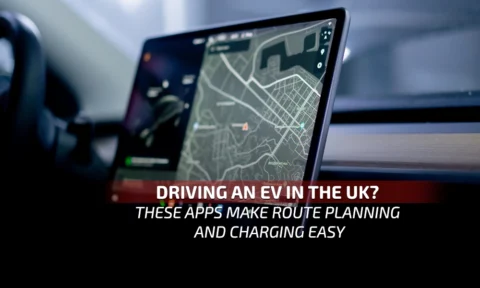
- App Ecosystem: You may need multiple apps or a unified aggregator like Amap to access different EV charging network China providers.
- Equipment Maintenance: Despite the volume, zombie piles and malfunctioning chargers can still be found in older, less-maintained districts.
- Stall Blocking: While rare now due to smart floor locks, gasoline cars occasionally block EV spots, a practice known as ICE-ing.
The Reality of Charging Electric Cars in China
While the numbers are impressive, charging electric cars in China still requires a bit of strategy. If you live in a modern apartment complex with a private parking space, you can install a home wallbox for the ultimate convenience. However, for those living in older high-rises, the reliance on the public EV charging network is high.
Fortunately, the sheer volume of EV charging stations in China means that even without a home plug, owning an EV is often more convenient and significantly cheaper than maintaining a traditional internal combustion engine vehicle.
Final Thoughts: China EV Charging Infrastructure in 2026
China’s EV charging infrastructure is no longer just about scale; it is about efficiency, speed, and integration. With millions of chargers, nationwide fast-charging corridors, standardized technology, and intelligent grid management, the country has created an ecosystem that supports mass EV adoption at every level. While challenges such as holiday congestion and app fragmentation remain, they are operational rather than structural issues. For most drivers, whether charging at home, in cities, or on long highway journeys, electric vehicle ownership in China is practical, cost-effective, and increasingly seamless, positioning the country as the global benchmark for EV infrastructure.
Most Common Questions
Yes, Tesla has opened most of its EV charging network in China to non-Tesla vehicles, provided they have a GB/T compatible port and the Tesla app.
No, the cost of charging an EV in China is generally 60-80% lower than the cost of gasoline for an equivalent distance, making it a highly economical choice for commuters.
Rural China’s EV infrastructure is growing rapidly. Under the 2027 plan, the government is ensuring that every township has at least one high-power DC station.
If you bought your car in China, it uses the national GB/T standard. Imported cars from Europe CCS2 will require a specialized adapter for public EV charging China stations.
Use integrated maps like Amap or Baidu Maps. They show real-time availability, charging speeds, and current pricing for the entire EV charging network China.
Join the conversation at Ask about cars for more hacks and car community advice!
For More Car-Related Blogs:
How Chinese EV Brands Could Change the US Market in 2026 — What Buyers in Miami Need to Know
Munich Auto Show 2025: The Hottest New EV & Budget Models Revealed