

Quick Insights before you Read
1. What is the best Chinese electric car in 2026?
The Xiaomi SU7 Ultra leads with a 1,500+ hp tri-motor setup and a smartphone-grade operating system.

2. Which Chinese EV brands should U.S. drivers know?
BYD, Zeekr, and Nio are the key players preparing service networks and partnerships for North America.
3. Is there an affordable Chinese EV in 2026?
Yes. The BYD Dolphin offers about 250 miles of range and a high-quality interior for under $20,000 in global markets.
4. What is the cheapest Chinese Tesla alternative?
The Xpeng Mona M03 delivers Model 3 design and advanced self-parking at roughly 30% lower cost.
5. Which underrated Chinese EV should I watch?
The Leapmotor C16 stands out with 800V fast charging and rear-seat cinema screens at a mid-market price.
The global electric vehicle conversation is no longer dominated by Detroit or Stuttgart. As the shift toward sustainable mobility accelerates, attention is turning east, raising a critical question: which brand is delivering the best Chinese electric car in 2026?
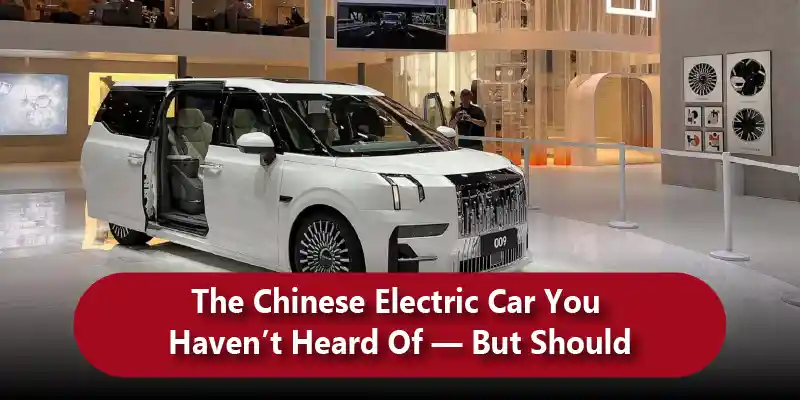
Xiaomi, which is globally recognized for redefining consumer technology through smartphones, Xiaomi has made a decisive entry into the automotive world with the SU7. More than just an electric car, the SU7 represents a new category of mobility tech-first, high-performance machine built around software intelligence. With seamless ecosystem integration and cutting-edge digital architecture, it challenges and in many ways surpasses the benchmarks set by today’s most advanced Western EVs.
Is the Xiaomi SU7 the best value Chinese electric car?
Yes, it offers supercar-level specs at a fraction of the cost. While luxury European brands charge six figures for sub-3-second 0-60 mph times, the Xiaomi SU7 delivers this performance for the price of a mid-range executive sedan. It is arguably the best value Chinese electric car because it merges extreme performance with a seamless digital ecosystem.
- Rapid Charging: The 800V architecture allows for 300km of range to be added in just 10 minutes of charging.
- Smart Ecosystem: Your car automatically syncs with your home devices, allowing you to turn on your AC or lights from the dashboard as you pull into the driveway.
- Aerodynamics: The car features one of the lowest drag coefficients in the world, which directly increases highway range and efficiency.
Also Read: How Chinese EV Brands Could Change the US Market in 2026 — What Buyers in Miami Need to Know
What makes the Xpeng P7+ a hidden gem Chinese EV?
It focuses on AI-driven comfort rather than just raw speed. Many buyers overlook Xpeng in favor of bigger names, but the P7+ is a hidden gem Chinese EV that specializes in visual-only autonomous driving. By removing expensive Lidar sensors and using advanced AI cameras, they have made self-driving technology more accessible.
- Space Efficiency: The hatchback-sedan hybrid design offers more luggage space than most compact SUVs.
- AI Learning: The car’s software monitors your driving style and adjusts suspension stiffness and steering weight to match your preferences.
- Cost Savings: By utilizing camera-based tech, Xpeng has lowered the entry price, making it a highly affordable chinese ev 2026 option.
Why is the BYD Seal considered the cheapest Chinese Tesla alternative?
Vertical integration allows for unmatched price-to-performance ratios. If you want the Tesla experience without the Tesla price tag, the BYD Seal is the cheapest Chinese Tesla alternative. BYD manufactures its own batteries, motors, and chips, which removes the middleman and lowers the final sticker price for the consumer.
- Safety Innovation: The Blade Battery is designed to be safer during crashes, passing nail-penetration tests that would cause standard batteries to catch fire.
- Structural Integrity: The battery is integrated directly into the car’s frame, which increases cabin space and improves handling.
- Market Presence: As one of the top Chinese EV brands usa enthusiasts are tracking, BYD’s global scale ensures that parts and software updates are consistent.
Also Read: GM + Hyundai Alliance: A Bold Move to Counter Chinese EV Dominance
Can we expect Chinese EV cars usa availability this year?
Availability is expanding through backdoor brands and local manufacturing. While trade laws are complex, Chinese EV cars’ availability is growing via brands like Polestar and Lotus, which utilize Chinese platforms and engineering. In 2026, we are seeing more satellite showrooms appearing in major US cities to showcase these platforms.
- Dealer Networks: Many Chinese brands are partnering with existing US dealer groups to provide local maintenance and warranty support.
- Design Standards: These vehicles are now being designed in California and Munich studios to ensure they meet the aesthetic and safety preferences of American drivers.
- Leasing Options: To bypass high purchase tariffs, some companies are offering subscription-based models for underrated Chinese electric vehicles.
What do the latest Chinese electric cars review 2026 data show?
The data confirms that reliability has surpassed the experimental phase. Current Chinese electric cars review 2026 metrics indicate that battery degradation in these models is lower than the industry average, largely due to the widespread use of LFP chemistry.
- Longevity: LFP batteries can be charged to 100% every single day without the rapid wear associated with traditional Nickel-based batteries.
- Winter Performance: New thermal management systems have fixed the cold-weather range drop that plagued earlier EV models.
- Software Stability: Frequent Over-the-Air updates mean the car’s infotainment and safety features actually improve the longer you own it.
Final Thoughts: The New Center of Gravity in the EV World
The 2026 electric vehicle landscape makes one reality clear: innovation leadership is no longer confined to traditional automotive powerhouses. Chinese EV manufacturers have moved decisively beyond value positioning and are now setting benchmarks in performance, software intelligence, charging technology, and cost efficiency.
Models like the Xiaomi SU7 demonstrate how deep ecosystem integration and software-first engineering can redefine value at the premium-performance level. At the same time, vehicles such as the Xpeng P7+ and BYD Seal prove that advanced autonomy, safety, and long-term reliability can be delivered at price points Western brands still struggle to match.
As availability in the U.S. expands through partnerships, platform sharing, and alternative ownership models, Chinese electric cars are no longer a future consideration; they are a present competitive force. For buyers evaluating performance, technology, and long-term ownership value in 2026, overlooking Chinese EVs is no longer an option.
Frequently Asked Questions
The Nio ES8 or Leapmotor C16 are excellent choices. They offer three-row seating and advanced safety features, making them highly underrated Chinese electric vehicles in the family segment.
Yes, the Zeekr 001 equipped with the 140kWh Qilin battery can achieve over 600 miles on a single charge, making it a leader in long-distance travel.
It offers nearly identical dimensions, acceleration, and tech features to the Tesla Model 3 but typically retails for $5,000 to $8,000 less in competitive markets.
Most top Chinese EV brands on USA watchlists feature cars that have earned 5-star Euro NCAP ratings, which are among the strictest safety standards in the world.
Join the conversation at Ask about cars for car-related blogs, maintenance tips and car hacks.
For More Car-related Blogs:
10 Reasons UAE Drivers Are Switching to Chinese EVs Faster Than Ever