


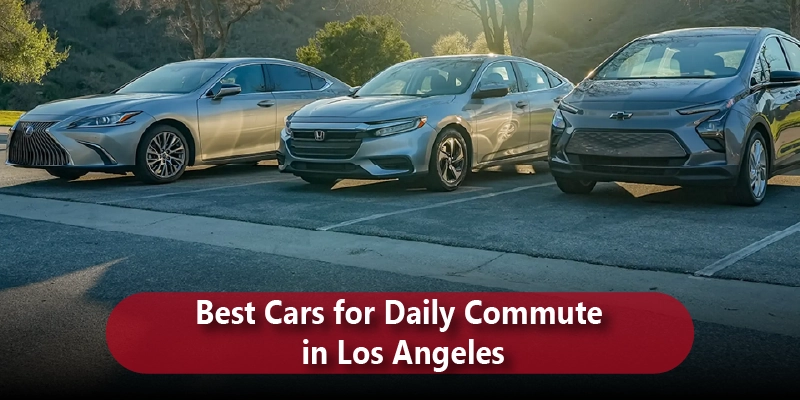
The best commuter cars in Los Angeles for 2026 prioritize hybrid efficiency, comfort, and advanced driving tech for heavy stop-and-go traffic.
Commuting in Los Angeles Has Changed
Driving in Los Angeles has never been simple, but in 2026, the expectations for a daily commuter vehicle have fundamentally shifted. With persistent congestion across major corridors such as the 405, 101, and I-5, and the expiration of certain HOV lane privileges, the emphasis has moved away from speed and toward efficiency, consistency, and comfort.
A modern commuter car is no longer just a means of transport. It is a controlled environment where drivers spend a significant portion of their day. That reality has redefined buying priorities. Fuel economy in urban conditions now outweighs highway performance figures.
For professionals commuting from the San Fernando Valley, Orange County, or the Inland Empire into central Los Angeles, the right vehicle can significantly reduce both financial strain and daily stress. Choosing incorrectly, on the other hand, often leads to higher fuel expenses, discomfort, and long-term dissatisfaction.
Understanding What Defines a Commuter Car in Los Angeles
Los Angeles presents a unique driving ecosystem. Unlike cities where mileage accumulates through long highway stretches, LA commuters experience extended idle times, frequent braking cycles, and inconsistent traffic flow. These conditions expose the limitations of traditional gasoline vehicles and highlight the advantages of hybrid and electric powertrains.
Fuel efficiency in city conditions is the most critical metric. Vehicles that perform well in stop-and-go traffic, particularly hybrids, benefit from regenerative braking systems that convert deceleration into usable energy. This results in significantly improved real-world mileage compared to internal combustion engines, which continue to consume fuel even when stationary.
Equally important is the integration of advanced driver-assistance systems. Features such as adaptive cruise control with stop-and-go capability, lane centering, and collision mitigation systems reduce the cognitive load on drivers. Over the course of a 60 to 90-minute commute, these technologies make a measurable difference in fatigue levels and driving consistency.
Top Commuter Cars for Los Angeles in 2026
Several vehicles stand out in 2026 because they align closely with the demands of Los Angeles driving conditions. These models are not just efficient on paper; they perform consistently in real-world urban environments.
- The Toyota Camry Hybrid continues to define the midsize commuter segment. Its transition to a hybrid-only lineup reflects broader market trends toward electrification. Delivering over 50 miles per gallon in city conditions, it offers a balance of efficiency and ride comfort that suits long-distance commuters.
- The Honda Civic Hybrid represents a more compact alternative without compromising reliability. Known for its durability and predictable maintenance profile, the Civic Hybrid is well-suited for drivers who require maneuverability in tight urban spaces while maintaining strong fuel economy.
- As competition intensifies, a bigger question emerges: Can BYD challenge Tesla in the U.S. EV market? The Tesla Model 3 occupies a different position in the commuter landscape. As a fully electric vehicle, it eliminates fuel costs associated with gasoline and introduces a new level of driving refinement.
- Hyundai’s Elantra Hybrid offers a compelling value proposition. It combines competitive fuel efficiency with features typically found in higher price segments. For commuters seeking affordability without sacrificing comfort or technology, it provides a balanced solution.
- The Toyota Prius remains one of the most efficient vehicles available. Its consistent ability to exceed 55 miles per gallon in city driving conditions makes it particularly attractive for cost-conscious commuters.
Comparative Overview of Leading Models
| Model | Powertrain | City Efficiency | Primary Advantage | Best Use Case |
| Toyota Camry Hybrid | Hybrid | 50+ MPG | Comfort and consistency | Long-distance daily commuting |
| Honda Civic Hybrid | Hybrid | 48 MPG | Reliability and agility | Urban and mixed driving |
| Tesla Model 3 | Electric | 300+ mile range | Low operating cost, automation | Tech-focused commuters |
| Hyundai Elantra Hybrid | Hybrid | 50 MPG | Value and feature integration | Budget-conscious buyers |
| Toyota Prius | Hybrid | 55+ MPG | Maximum efficiency | High-frequency city driving |
The Economics of Commuting in Los Angeles
Fuel costs remain one of the most significant recurring expenses for Los Angeles drivers. In heavy traffic, traditional vehicles operate inefficiently, consuming fuel without covering meaningful distance. Over time, this inefficiency translates into substantial financial loss.
Hybrid vehicles mitigate this issue by optimizing fuel use during low-speed operation. Electric vehicles go a step further by eliminating fuel consumption. When combined with lower maintenance requirements, fewer moving parts, no oil changes and the total cost of ownership becomes considerably more favorable.
Insurance and depreciation must also be considered. While some electric vehicles carry higher insurance premiums, their lower running costs often offset this difference. Meanwhile, brands with strong reputations for reliability tend to retain value better, reducing long-term ownership costs.
Avoiding Common Buying Mistakes
A recurring issue among buyers is the reliance on standardized fuel economy figures without considering real-world conditions. Laboratory-tested MPG ratings often fail to reflect the realities of Los Angeles traffic. Vehicles that perform well on highways may underperform in urban environments.
Another common oversight is undervaluing comfort. While compact vehicles may appear practical, insufficient seat support and rigid suspension systems can lead to long-term discomfort. Given the duration of typical LA commutes, these factors should carry significant weight in the decision-making process.
Cost miscalculations also occur when buyers focus solely on the purchase price. A lower upfront cost does not necessarily translate to long-term savings if fuel consumption, maintenance, and depreciation are higher.
Frequently Asked Questions
The Honda Civic and Toyota Corolla Hybrid offer strong efficiency and reliability within budget.
Yes, especially with home charging, EVs reduce fuel costs and perform well in traffic.
The Toyota Prius leads with over 55 MPG in urban conditions.
Yes, they significantly improve fuel economy by optimizing energy use during braking and idling.
Adaptive cruise control with stop-and-go functionality is essential for reducing fatigue.
Key Takeaways
- The Los Angeles commuting environment rewards efficiency, reliability, and comfort over traditional performance metrics.
- Hybrid and electric vehicles are better aligned with urban driving conditions, offering both financial and practical advantages.
- Technology plays a central role in reducing fatigue, while reliability ensures consistency in daily use.
Get More Updated Automotive Insights at Askaboutcars!
