


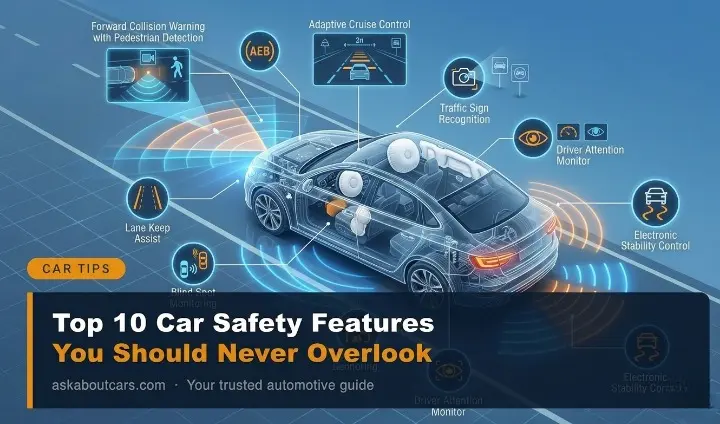
At Ask About Cars, we believe that understanding your vehicle’s safety technology is just as important as knowing how to drive it. Modern cars are packed with electronic systems that actively work to prevent accidents, but only if you know they exist and what they do.

This guide breaks down the 10 most critical safety features found in today’s cars, explains how each one works, and tells you why you should always check for them when buying a vehicle, new or used.
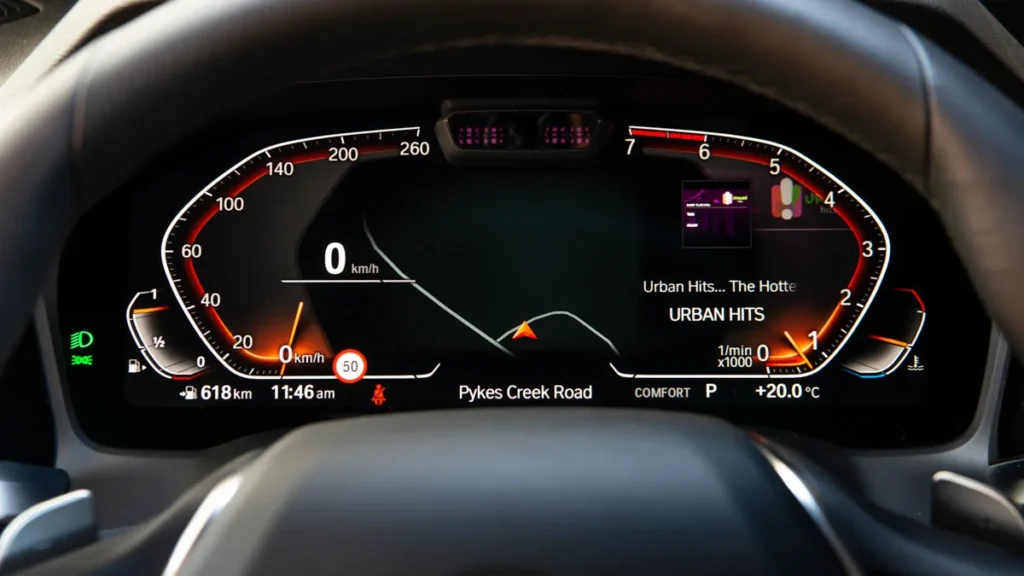
1. Anti-Lock Braking System (ABS)
ABS is one of the most foundational safety technologies in modern vehicles. When you brake hard, wheels can lock up and cause the car to skid, especially on wet or icy roads. ABS detects this and rapidly pulses the brakes on each wheel individually, maintaining traction and allowing you to steer even during emergency stops.
Without ABS, hard braking in an emergency can cause you to slide straight ahead with no steering control. With ABS, you can brake fully and still steer around an obstacle.
2. Electronic Stability Control (ESC)
ESC monitors where you’re steering versus where the car is actually going. If it detects the car beginning to skid or oversteer — common in wet conditions or when taking corners too fast — it applies braking force to individual wheels to pull the car back on course. It can also reduce engine power if necessary.
ESC is now mandatory in new vehicles in most countries and has been credited with reducing single-vehicle crash fatalities significantly.
3. Automatic Emergency Braking (AEB)
AEB uses radar, cameras, or lidar to monitor the road ahead. If the system detects an imminent collision and the driver hasn’t reacted in time, it first issues an alert and then applies the brakes automatically. Some systems can bring the car to a complete stop; others merely reduce impact speed.
Even a speed reduction of 20–30 km/h before impact dramatically reduces the severity of a crash.
Active vs Passive Car Safety Features — Key Differences
| Category | Examples | How They Work | When They Activate |
| Active Safety | ABS, ESC, AEB, ACC, LDW | Actively intervene to prevent accidents | Before or during a crash event |
| Passive Safety | Airbags, seatbelts, crumple zones | Protect occupants once a crash occurs | During and after impact |
| Driver Assistance | Blind spot detection, parking sensors | Alert driver to unseen hazards | Continuously while driving |
4. Lane Departure Warning (LDW) & Lane Keep Assist (LKA)
Lane Departure Warning uses a forward-facing camera to detect lane markings. If the car begins to drift without the indicator being activated, it alerts the driver with an audible beep, steering wheel vibration, or visual warning.
Lane Keep Assist goes a step further by gently applying corrective steering to bring the car back into its lane. This is especially valuable on motorways during long drives when fatigue causes subtle drifting.
5. Blind Spot Detection (BSD)
Blind spot monitoring uses rear-facing radar sensors to detect vehicles in the zones alongside and behind your car that mirrors can’t show. When a vehicle is detected in your blind spot, a warning light appears in or near the relevant door mirror. Some systems also give a warning beep or steering resistance if you indicate while a vehicle is present.
This feature is particularly important given the road hazards posed by fast-moving vehicles in adjacent lanes, something we discuss in detail in our guide to common road hazards.
6. Adaptive Cruise Control (ACC)
Standard cruise control maintains a fixed speed. Adaptive Cruise Control automatically adjusts your speed to maintain a safe following distance from the vehicle ahead. If traffic slows, your car slows. When the road clears, it accelerates back to your preset speed.
This dramatically reduces driver fatigue on long motorway journeys and significantly lowers rear-end collision risk.
7. Rearview Camera & Parking Sensors
A rearview camera activates automatically when you engage reverse, showing what’s directly behind the car, a blind zone that even experienced drivers cannot see with mirrors alone. Parking sensors add audible proximity warnings as you approach obstacles.
Together these features have significantly reduced low-speed parking incidents and reversing injuries, particularly to children and pedestrians.
8. Traction Control System (TCS)
When a driven wheel spins faster than it should, due to ice, rain, or heavy acceleration, TCS reduces engine power or applies individual wheel brakes to restore grip. This prevents the car from spinning or fishtailing during acceleration on slippery surfaces.
TCS works alongside ESC and ABS as part of an integrated stability management system in modern vehicles.
9. Pedestrian Detection
Urban driving brings a higher risk of pedestrian collisions, particularly at junctions and in car parks. Pedestrian detection systems use cameras and radar to identify people in the car’s path and can trigger automatic braking if the driver doesn’t respond to the alert.
Some advanced systems can now detect cyclists and even animals. This technology is increasingly standard on mid-range family cars, not just premium models.
10. Airbags
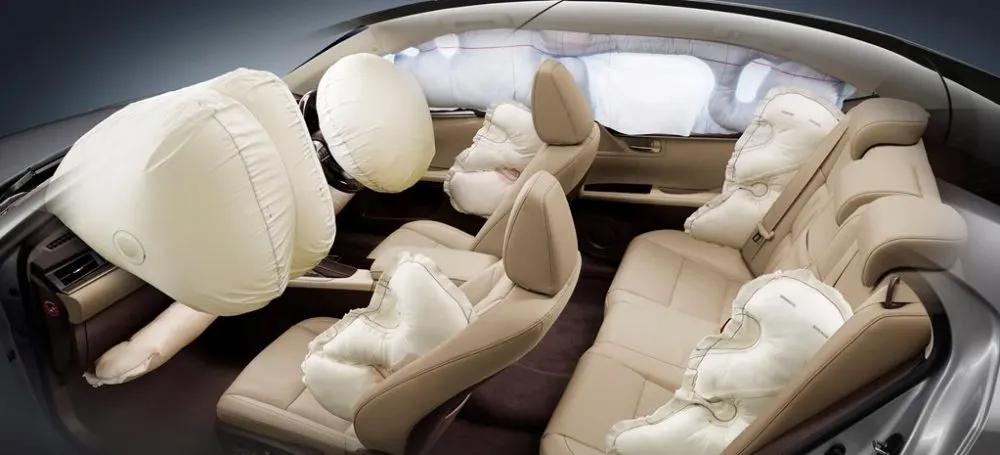
Airbags remain the bedrock of passive vehicle safety. Modern cars feature multiple airbags — front, side, curtain, knee, and sometimes rear — designed to deploy in fractions of a second to cushion occupants during a collision.
When buying a used car, always verify that airbags have not been deployed (and not replaced), and that the airbag warning light is not illuminated on the dashboard.
FAQs: Top Car Safety Features You Should Know
There is no single “most important” feature — each serves a unique purpose. However, ABS, ESC, and AEB are widely considered the most critical as they actively prevent accidents by helping the driver maintain control and automatically responding to collision risks.
No. AEB is designed to reduce the severity of or prevent collisions, but it is not a substitute for attentive driving. It works best as a backup in split-second situations where the driver cannot react in time.
Not at all. While BSD is especially helpful when merging onto highways, it is equally valuable in city driving during lane changes, heavy traffic, and parking maneuvers where other vehicles may be hidden from view.
Not necessarily. While features like ABS, airbags, and rearview cameras are standard in most new vehicles, others like Adaptive Cruise Control, Pedestrian Detection, and Lane Keep Assist are often found in mid-range to premium trims or as optional add-ons.
No. These features are tools to assist you, not replace responsible driving. You should always stay alert, obey traffic laws, and treat these systems as a safety net rather than a reason to be less cautious on the road.
What to Do When Buying a Car
Always check that your prospective purchase has as many of these features as possible. Newer safety features like AEB and LKA are becoming standard even on budget models. A safer car is also a lower-cost car to insure, read our guide to shopping for car insurance wisely to understand how safety features directly affect your premium.
And remember, the safest car is still a well-maintained one. Visit our essential car maintenance guide for new drivers to make sure your safety systems always have the best possible platform to operate from.For more expert automotive advice, visit Ask About Cars.