

Key Insights
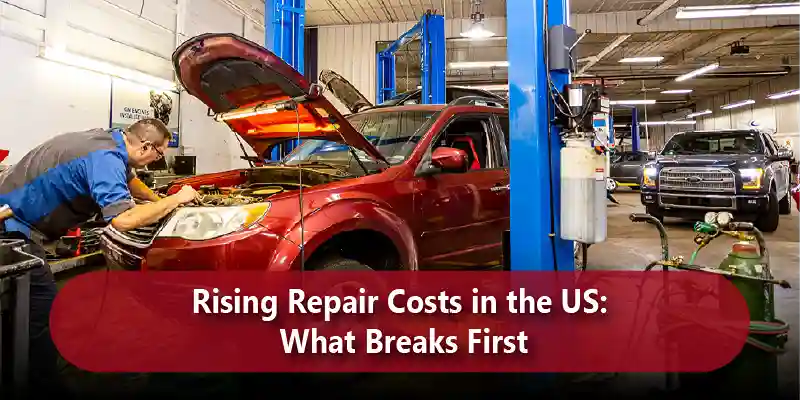
Car ownership in the United States has entered a new cost reality. As vehicles become more complex and technology-driven, car repair costs in the US are rising faster than most owners expect. This blog breaks down why repairs are so expensive in 2026, examines the most costly components to fix or replace, and explains how modern systems like ADAS, CVTs, and EV batteries are reshaping maintenance economics. You’ll also learn practical strategies to reduce expenses and recognize when a repair no longer makes financial sense.

Is your car starting to feel like a financial burden? Do you feel like every trip to the mechanic results in a four-figure bill?
The trend of rising car repair costs US is driven by more than just inflation. As vehicles become more technologically advanced, the price of keeping them on the road has shifted. In 2026, the average car repair costs in the USA data show that owners are spending significantly more on both emergency fixes and routine upkeep than they were just three years ago.
Why are car repairs so expensive in 2026?
Understanding the shift in pricing requires looking at how cars are built today. The days of simple mechanical fixes are largely over.
- Microchip and Sensor Density: A modern front bumper now contains ultrasonic sensors, radar units, and sometimes cameras for parking assist. A simple crack in the plastic now requires hours of digital recalibration.
- Specialized Diagnostic Software: Independent shops must now pay thousands of dollars in annual subscriptions to access proprietary manufacturer software just to reset a maintenance light.
- Precision Engineering: Modern engines use Gasoline Direct Injection and turbochargers. These parts operate under extreme pressure and require high-grade materials that are expensive to manufacture.
What are the most expensive car repairs US owners face?
When a major component fails, the bill can often exceed the actual resale value of an older vehicle. Knowing the car parts that cost the most to replace helps you decide when to repair and when to trade in.
What is the current transmission repair cost in the US?
Between $3,500 and $7,500 for most modern vehicles. The transmission repair cost in the US has spiked because of the move toward Continuously Variable Transmissions and dual-clutch systems.
- Fluid Neglect: Skipping a $150 fluid flush leads to internal heat buildup.
- Clutch Wear: In high-speed automatics, internal friction plates wear down, causing gear hunting and eventual total failure.
- Electronic Control Modules: Sometimes the gears are fine, but the computer controlling them fails, requiring a full unit replacement because the electronics are sealed.
Also Read: How much does it cost to charge a Tesla at home in the USA?
Is the EV battery replacement cost US still a major concern?
Yes, it remains the single most expensive potential repair for electric car owners. While technology is improving, the EV battery replacement cost in the US still averages between $6,000 and $18,000, depending on the kilowatt-hour capacity.
- Thermal Stress: Repeated exposure to 100°F+ temperatures degrades the lithium-ion cells.
- Cycle Life: Every battery has a finite number of charge cycles before the chemistry loses its ability to hold a charge.
- Labor Specialization: Replacing these packs requires Master EV Technicians who command the highest labor rates in the industry.
Are car maintenance costs rising US wide?
Even basic wear-and-tear items are seeing price hikes. The car maintenance costs that US owners deal with are often tied to the cost of raw materials like semi-metallic compounds and synthetic oils.
What are the projected brake repair costs in the US in 2026?
Expect to pay $300 to $900 per axle for full service. Brake repair costs US in 2026 reflect the higher cost of specialized rotors designed to work with electronic parking brakes and regenerative systems.
- Rotor Thinning: Modern rotors are thinner to save weight and cannot be turned or resurfaced like older cars. You must buy new ones every time.
- Sensor Replacement: Many luxury and performance cars now have one-time-use wear sensors that must be replaced along with the pads.
How to stay ahead of these expenses
Navigating the world of rising car repair costs in the US requires a proactive strategy. You can no longer afford to wait for a part to break before addressing it.
- Strict Fluid Intervals: Changing your oil, coolant, and transmission fluid at 75% of the recommended interval can add years to the life of your vehicle.
- Visual Inspections: Check your CV boots and serpentine belts for cracks every six months. A $100 belt replacement prevents a $2,000 engine repair if it snaps while driving.
- Shop Around: Dealerships have the highest overhead. For non-warranty work, a certified independent specialist can often save you 25% on the average car repair costs USA.
Also Read: Beat LA Traffic: Simple Hacks That Actually Work
Final Thoughts: Rising Car Repair Costs in 2026
Rising car repair costs in the US are no longer an occasional inconvenience. They are a defining factor of modern vehicle ownership. Advances in safety systems, electrification, and precision engineering have delivered better performance and efficiency, but they have also introduced higher parts prices, specialized labor, and increased diagnostic complexity.
Major repairs such as transmission failures, EV battery replacements, and ADAS-related recalibrations can now exceed the value of older vehicles, forcing owners to think strategically rather than emotionally. At the same time, even routine maintenance such as brakes, fluids, and sensors has become more expensive due to material costs and design changes.
The key to staying ahead in 2026 is proactive maintenance, informed decision-making, and cost awareness. Understanding service intervals, choosing the right repair facilities, and knowing when to repair versus replace can significantly reduce long-term financial strain. In an era where technology defines reliability, the smartest car owners are those who treat maintenance as a calculated investment and not a last-minute expense.
Ultimately, managing car repair costs isn’t about avoiding repairs altogether; it’s about making the right repairs at the right time, before small issues become budget-breaking problems.
Most Common Questions
The integration of ADAS means that even a windshield replacement now requires a $400 calibration of the cameras, contributing to rising car repair costs in the US.
Yes. Most lifetime fluids are not actually for the lifetime of the car. Changing your transmission fluid every 50,000 miles is the best way to avoid a total rebuild.
Aside from the battery, the hybrid inverter and the electric AC compressor are among the most expensive car repairs US owners face, often costing over $2,500.
Actually, they can be lower. Because EVs use regenerative braking, the physical pads and rotors often last twice as long as those on gas-powered cars, helping offset other car maintenance costs rising US.
If your annual repair bills exceed 10% of the car’s current market value, or if a single repair costs more than the car is worth, it is usually time to sell.
The integration of ADAS means that even a windshield replacement now requires a $400 calibration of the cameras, contributing to rising car repair costs in the US.
Join the conversation at Ask about cars for more insights into keeping your vehicle on the road without breaking the bank.
Aside from the battery, the hybrid inverter and the electric AC compressor are among the most expensive car repairs US owners face, often costing over $2,500.
Actually, they can be lower. Because EVs use regenerative braking, the physical pads and rotors often last twice as long as those on gas-powered cars, helping offset other car maintenance costs rising US.
For More Car-Related Blogs:
How much does it cost to charge a Tesla at home in the USA?