


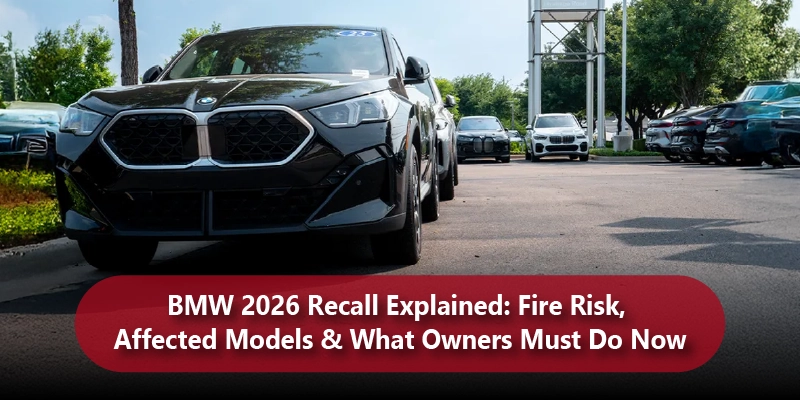
BMW recalls 575,000 vehicles due to a starter motor defect that may cause overheating and fire risk.
BMW has initiated a large-scale global safety recall covering approximately 575,000 vehicles manufactured between July 2020 and July 2022. The issue stems from premature wear in the starter motor solenoid as a magnetic switch, which can lead to electrical short circuits, localised overheating, and, in rare cases, engine bay fires.
This recall affects vehicles across the United States, Europe, Australia, and Asia, and includes multiple core BMW platforms. If you own a BMW produced during this window, immediate verification is strongly recommended.
What Is Causing the BMW 2026 Fire Risk?
The root cause lies in the starter motor’s magnetic switch, a critical component responsible for engaging the engine during start-up.
Failure Mechanism Breakdown
- Premature internal wear inside the solenoid relay
- Metal abrasion leading to electrical degradation
- Internal short circuit formation
- Localized overheating
- Potential ignition of surrounding components
Unlike prior fire-related recalls, the risk is highest during engine start-up or while the vehicle is running, not while parked.
Also Read: BMW i4 vs Mercedes EQE: Which Luxury EV Should You Buy?
Warning Signs Owners Should Watch For
- Slow or labouring engine crank
- Repeated hard starts
- Electrical burning smell
- Smoke from the engine compartment
- Intermittent no-start condition
These symptoms should not be dismissed as simple battery failure.
Recall Overview Table
| Category | Details |
| Total Vehicles | 575,000+ globally |
| Production Window | July 2020 – July 2022 |
| Defective Component | Starter motor solenoid |
| Main Risk | An electrical short becomes overheated and leads to fire |
| Risk Timing | During start-up or while running |
| Repair Cost | 100% Free |
| Repair Time | ~2 hours |
| Regions Impacted | US, Europe, Australia, Asia |
What BMW Is Doing
BMW dealerships globally are:
- Replacing the entire starter motor assembly
- Performing repairs free of charge
- Inspecting battery systems where needed
Owners can verify recall status via BMW’s official recall lookup tool or, in the United States, through the National Highway Traffic Safety Administration database.
Also Read: Toyota vs Volkswagen 2026: Who Really Leads the Global Auto Market?
What Owners Should Do Immediately
- Locate your 17-digit VIN dashboard or insurance documents.
- Check recall eligibility online.
- Schedule the free repair with an authorised BMW dealer.
- Avoid remote start and unattended idling until repair completion.
Common Mistakes to Avoid
- Waiting for physical recall letters
- Ignoring hard start symptoms
- Using remote start features
- Assuming newer 2023 builds are unaffected
An open recall can negatively impact resale value and buyer confidence.
Recall Distribution by Vehicle Category
| Vehicle Category | Estimated % of Affected Vehicles | Estimated Units (Approx.) |
| Sedans & Coupes | 42% | 241,500 |
| SUVs (X-Series) | 48% | 276,000 |
| Roadsters & Supra | 10% | 57,500 |
| Total | 100% | 575,000 |
Frequently Asked Questions
How do I check if my BMW is part of the recall?
Enter your VIN on BMW’s official recall lookup website.
Can I drive my car under recall?
Yes, but avoid unattended idling and remote start until repaired.
What part is being replaced?
The full starter motor assembly is replaced free of charge.
How long does the repair take?
Approximately two hours, depending on dealership workload.
What should I do if I smell smoke?
Pull over safely, switch off the engine, exit the vehicle, and call roadside assistance.
Key Takeaways
- This Is a Large-Scale Global Recall
Over 575,000 vehicles worldwide are affected, making this one of the most significant recent starter-related recalls issued by BMW. The scale alone indicates the seriousness of the manufacturing defect. - The Production Window Is Critical
Vehicles built between July 2020 and July 2022 are the primary concern. Even some early 2023 registrations may qualify if they were manufactured during late 2022 using affected components. - The Fire Risk Occurs While Driving or Starting
Unlike many historical vehicle fire recalls, this issue poses the highest risk during engine start-up or while the engine is running, not just when parked. That distinction increases urgency. - The Root Cause Is Mechanical Wear Leading to Electrical Failure
Premature wear inside the starter motor’s magnetic switch can cause an internal short circuit. Electrical degradation leads to localised overheating, which in extreme cases may ignite surrounding materials. - Warning Signs Should Not Be Ignored
Hard starts, extended cranking, burning electrical smells, or smoke from the engine bay are early red flags. These symptoms may appear before complete failure. - Repairs Are Completely Free
BMW dealerships globally are replacing the entire starter motor assembly at zero cost to owners. The repair typically takes around two hours. - Driving Is Permitted With Caution
Owners can continue driving, but should avoid remote start and never leave the vehicle idling unattended until the repair is completed. - Delaying Repairs Can Impact Resale Value
An open safety recall visible on a VIN history report may reduce resale value and deter potential buyers. - Immediate VIN Verification Is Essential
The fastest way to confirm eligibility is by checking your VIN via BMW’s official recall lookup portal or, in the United States, through the National Highway Traffic Safety Administration database.
Get More Automotive Insights at AskAbout Cars!
For More Car-Related Blogs:
2026 BMW 3 Series Tested in London Traffic — Brilliant Upgrade or Overpriced Hype?
For advertising, sponsored content, or brand collaboration opportunities on this platform, please visit: https://askaboutcars.com/advertise/