

The global automotive landscape is undergoing a dramatic shift. For decades, Germany’s Big Three dominated the definition of performance and luxury, setting benchmarks that the rest of the world followed. But as we move into 2026, that long-standing narrative is evolving. Across key markets in North America and Asia, BMW and Mercedes are facing growing competition from Asian manufacturers that are redefining luxury, placing greater emphasis on intelligent software, electrification, and hybrid efficiency rather than sheer engine sound and traditional performance cues. This transition marks a new era where innovation, sustainability, and technology are reshaping what premium mobility truly means.
Is the BMW vs Toyota market share gap widening?
The shift is largely driven by a massive pivot in consumer preference toward hybrid engines. While BMW bet heavily on high-end electric performance, Toyota doubled down on the Multi-Path strategy.
What is happening in the market:
- Consumers are wary of pure EV charging times, leading to a surge in Toyota and Lexus hybrid sales.
- This results in Toyota reclaiming the top spot for brand loyalty in 2025 and 2026.
- BMW’s focus on high-margin EVs has left a gap in the $50,000 – $70,000 attainable luxury segment.
- Consequently, Toyota’s premium models are capturing former 3-Series and 5-Series buyers.
Why are German automakers facing a China decline in 2026?
China was once the most profitable market for the Stuttgart and Munich giants. Today, German automakers’ China decline 2026 figures represent a wake-up call for the entire European industry.
The reality on the ground in Asia:
- Local brands like BYD and Xiaomi are offering living room interior experiences with massive AI integration.
- As a result, German luxury interiors now feel old-fashioned to the younger, tech-savvy Chinese demographic.
- Production speed in China is twice as fast as in Germany, meaning Asian rivals launch new tech features every 12 months.
- This forces Mercedes and BMW to slash prices just to keep their showroom traffic steady.
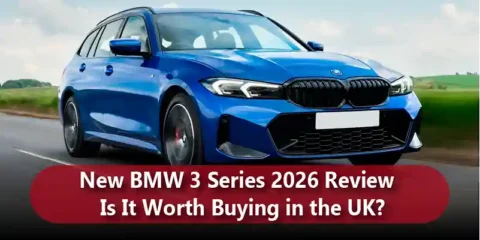
Also read: 2026 BMW 3 Series Tested in London Traffic — Brilliant Upgrade or Overpriced Hype?
How are Hyundai and Kia challenging Mercedes-Benz?
The Hyundai Kia US market share growth isn’t just about budget cars anymore. Through their Genesis sub-brand and high-end EV lines, they are directly poaching customers from Mercedes-Benz.
The shift in consumer behavior:
- Hyundai and Kia now offer an 800V fast-charging architecture that outperforms many Mercedes EQ models.
- Buyers realize they can get S-Class level tech in a Genesis for $30,000 less.
- This leads to a higher conquest rate, where owners of German cars switch to Korean brands for their next purchase.
- The 10-year warranty offered by Asian brands provides a peace of mind that German maintenance schedules cannot match.
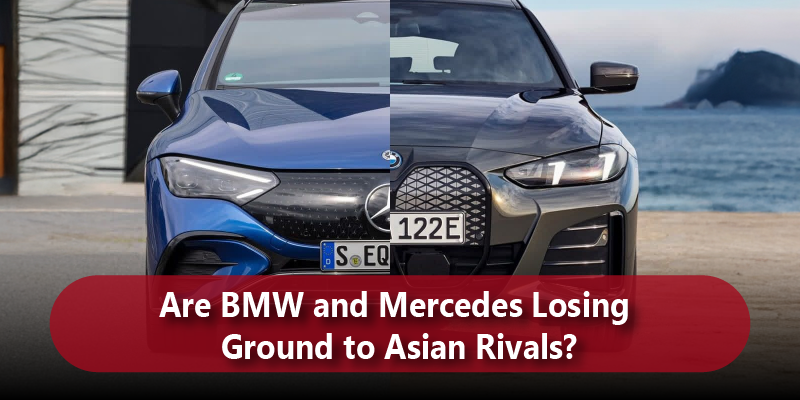
Also read: Mercedes EQE vs BMW i4 – Which luxury EV is better
Is Lexus overtaking BMW in the US market?
For years, the battle for the #1 luxury spot in America was between BMW and Mercedes. Now, Lexus overtaking BMW US headlines are becoming common as the Japanese brand refreshes its entire lineup.
Why the American market is pivoting:
- Reliability remains the top concern for luxury buyers keeping cars past a three-year lease.
- Lexus dominates the reliability index, whereas BMW and Mercedes face criticism for complex, expensive electronic repairs.
- The introduction of the Lexus GX 550 has stolen the adventure luxury spotlight from the BMW X5.
- This creates a trend where Toyota Lexus vs BMW Mercedes comparisons almost always favor the Japanese brands for long-term ownership.
Also read: New BMW 3 Series 2026 Review — Is It Worth Buying in the UK?
What is the state of BMW and Mercedes EV competition in Asia?
The BMW Mercedes EV competition in Asia is currently the most difficult challenge for European engineers. While the German driving feel is still superior, it is becoming less of a selling point.
The evolution of luxury car sales in Asian rivals:
- In markets like Korea and China, the car is seen as a mobile office.
- Asian brands prioritize 5G connectivity and seamless app integration.
- German brands are still catching up on software, leading to glitchy user interfaces compared to the smooth systems in Asian rivals.
- This creates a price-to-value gap that makes Asian brands beating luxury cars an inevitability in the electric era.
Also read: Mercedes EQE vs BMW i4 – Which luxury EV is better
| Category | Key Insights | Impact |
| BMW vs Toyota Market Share | Toyota brand value up +23% (2025) BMW : losing ground in global brand volume Key driver: Toyota’s hybrid-led volume strategy | Toyota regains leadership in global Volume: Stronger brand loyalty vs BMW |
| German Market Share Decline in China (2026) | German share dropped from 25% – 15% Local brands: BYD, Aito, Xiaomi dominate tech & speed Production: cycles twice as fast as Germany | -27% sales decline in China (2025) Forced price cuts by BMW & Mercedes |
| Hyundai / Kia vs Mercedes & BMW (US) | Hyundai/Kia record US growth Genesis offers luxury tech at lower price 10-year warranty advantage | High conquest rate from German brands Buyers switching for value + tech |
| Lexus Overtaking BMW (US) | Lexus outselling BMW in key quarters Lexus #1 in reliability rankings Strong SUV lineup like GX, RX & TX | Higher resale value & Lexus becomes long-term ownership favorite |
| EV Competition in Asia – German Brands | German EVs struggling on price vs tech Slower software development Higher battery & production costs | Reduced competitiveness in Asia Declining EV market relevance |
| EV Competition in Asia – Asian Brands | Superior software integration Faster charging & better range +30% efficiency advantage | Strong dominance in EV adoption Better value-to-price ratio |
Wrapping Up: Why Asia Is Redefining the Future of Premium Cars
The evidence across global markets is clear: the definition of luxury is no longer dictated solely by heritage, horsepower, or badge prestige. As consumer priorities shift toward reliability, intelligent software, hybrid efficiency, and long-term value, Asian automakers are capitalizing on areas where German brands have been slow to adapt. Toyota, Lexus, Hyundai, and Kia are not just competing on price that they are winning on technology integration, ownership experience, and trust.
For BMW and Mercedes, the challenge is no longer about engineering excellence alone, but about speed, software maturity, and market relevance in an era shaped by electrification and digital ecosystems. If current trends continue, 2026 may be remembered as the inflection point when luxury decisively moved from mechanical superiority to intelligent mobility firmly tilting the balance of power toward Asia.
Most Common Questions
It comes down to Smart Tech vs. Mechanical Tech. Asian rivals are treating cars like software platforms, which is what the 2026 buyer demands, whereas German brands are still heavily focused on traditional mechanical engineering.
Lexus continues to hold the #1 spot for long-term reliability. German brands have improved, but their complex sensor arrays and turbocharged systems lead to higher out-of-warranty costs compared to Lexus hybrids.
While BMW and Mercedes are opening new R&D centers in Shanghai, the patriotic buying trend in China, combined with the superior EV tech of local brands, suggests that the German days in China may be over.
Design and Value. By hiring former German car designers and offering cutting-edge EV platforms, Hyundai and Kia are winning over buyers who want a premium look without the luxury tax of a German badge.
Yes. In 2025 and 2026, the Lexus RX and the Genesis GV80 have seen record sales, often at the direct expense of the BMW X5 and Mercedes GLE.
Is your next car going to be German-engineered or Asian-innovated? Let us know! Join the conversation at Ask about cars.