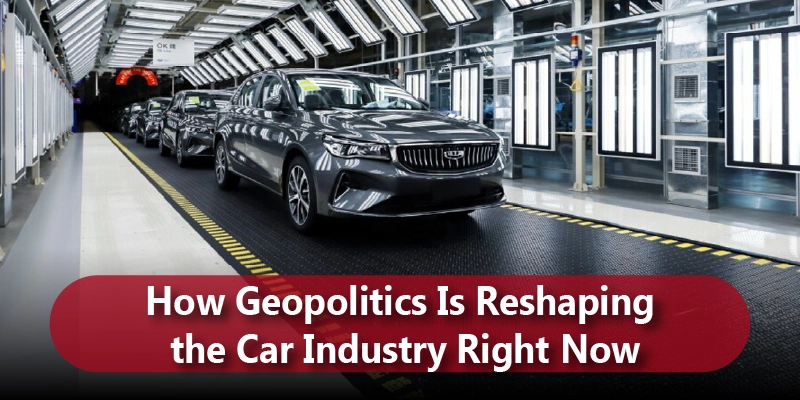
Geopolitics now shapes car prices and availability, as trade barriers, supply chains, and regional production redefine the global automotive market.
The global automotive industry in 2026 is undergoing one of its most significant transformations in decades. What was once a highly interconnected ecosystem driven by globalization has shifted into a more fragmented, region-based structure. This shift is not accidental, and it is the direct result of rising geopolitical tensions, trade policies, and strategic competition among global powers.
Car manufacturing is no longer just about engineering excellence or consumer demand. Instead, it is increasingly influenced by where raw materials are sourced, where vehicles are assembled, and which governments support or restrict their movement across borders. These geopolitical dynamics have reshaped everything from pricing to availability, forcing automakers and consumers alike to adapt to a new reality.
The Emergence of a Regional Automotive Order
The automotive industry is now structured around three dominant regional blocks: North America, Europe, and China. Each region operates under its own regulatory frameworks, trade policies, and industrial strategies.
China continues to dominate the electric vehicle ecosystem, controlling a significant portion of battery production and raw material processing. The United States, on the other hand, has adopted aggressive policies to promote domestic manufacturing, incentivizing companies to produce vehicles and components locally. Meanwhile, Europe is attempting to balance environmental commitments with the need to protect its long-standing automotive legacy.
This tri-regional dynamic has replaced the earlier model of global integration. Automakers can no longer rely on a single production hub to serve worldwide markets. Instead, they must tailor their strategies to fit the specific requirements of each region.
Geopolitical Drivers and Their Automotive Impact
| Geopolitical Factor | Industry-Level Impact | Consumer-Level Impact |
| Trade Tariffs | Increased cost of imports | Higher vehicle prices |
| Localization Policies | Regional manufacturing expansion | Limited global model availability |
| Battery Regulations | Restricted sourcing options | Fewer affordable EV choices |
| Semiconductor Access | Production bottlenecks | Longer delivery timelines |
| Government Incentives | Boost for domestic production | Price advantages for local vehicles |
| Logistics Disruptions | Rising shipping costs | Market price fluctuations |
Is Geopolitics Driving Up Car Prices?
One of the most visible outcomes of geopolitical influence is the rise in vehicle prices. The cost structure of cars has changed significantly due to tariffs, supply chain diversification, and compliance requirements.
Imported vehicles are particularly affected. Tariffs and regulatory costs have made it more expensive for automakers to sell cars across borders. Electric vehicles, which depend heavily on globally sourced materials like lithium and cobalt, are even more sensitive to these changes.
However, this does not mean all cars are becoming unaffordable. In fact, regional production has created new opportunities for cost optimization. Vehicles manufactured within a specific trade bloc often benefit from subsidies and tax incentives, making them more accessible to local consumers.
The key shift is not just in pricing but in how pricing varies by region. Consumers are increasingly encouraged to purchase vehicles that are produced locally, as these come with fewer hidden costs and better financial incentives.
How Government Policies Are Reshaping Consumer Choices
Government intervention is playing a larger role than ever before in influencing what consumers buy. Incentives, tax credits, and regulatory frameworks are designed not only to promote cleaner mobility but also to strengthen domestic industries.
In many regions, buyers receive financial benefits only if the vehicle meets specific local production and sourcing criteria. This means that two similar vehicles can have significantly different effective prices depending on their eligibility for these incentives.
For consumers, this creates a new layer of decision-making. It is no longer just about choosing between petrol, hybrid, or electric, and it is also about understanding which vehicles qualify for benefits and why. This policy-driven market is subtly guiding consumer behavior toward regionally compliant options.
The Rise of Nearshoring and Multi-Hub Production
Automakers are rapidly restructuring their manufacturing strategies to adapt to geopolitical realities. The concept of nearshoring has gained prominence, where production is relocated closer to the end market.
Instead of relying on a single global factory, companies are building multiple smaller production hubs across different regions. This approach allows them to bypass trade barriers, reduce shipping costs, and comply with local regulations more effectively.
For example, North America is seeing increased investment in manufacturing facilities in Mexico, while Europe is expanding production capabilities in Eastern European countries. Emerging markets such as Morocco are also becoming important nodes in this new production network.
While this decentralization improves resilience, it also introduces complexity. Managing multiple production sites requires higher investment and coordination, which can indirectly contribute to higher vehicle prices.
Supply Chain Transformation in the Automotive Industry
The traditional supply chain model in the automotive industry prioritized efficiency. Known as the just-in-time approach, it minimized inventory and relied on precise coordination between suppliers and manufacturers.
In 2026, this model has largely been replaced by a resilience-focused approach often referred to as just-in-case. This shift is driven by the need to withstand disruptions caused by geopolitical tensions, trade conflicts, and resource constraints.
Automakers are now adopting strategies such as dual sourcing, where they secure components from multiple countries to avoid dependency on a single supplier. Vertical integration has also become more common, with companies investing directly in raw material extraction and component manufacturing.
In addition, advanced technologies are being used to monitor and predict supply chain risks. Real-time data analysis enables companies to respond proactively to potential disruptions, reducing the likelihood of production delays.
Although these measures improve stability, they also increase operational costs, which ultimately affect consumers.
Key Automotive Trends Shaped by Geopolitics
The influence of geopolitics is not limited to manufacturing and pricing, and it is also shaping the direction of automotive innovation.
One of the most notable trends is the rise of region-specific electric vehicles. Governments are implementing strict regulations regarding battery sourcing and production, leading to the development of EVs tailored to meet local requirements. This means that the same model may have different specifications depending on the region in which it is sold.
Another important trend is the growing focus on software and data security. Vehicles are becoming increasingly connected, and governments are scrutinizing the origin and functionality of automotive software. This has led to restrictions on certain technologies, adding another layer of complexity to vehicle development.
At the same time, hybrid vehicles are experiencing a resurgence. While electric vehicles remain a long-term priority, hybrids offer a practical solution in regions where charging infrastructure is still developing or energy stability is uncertain.
These trends highlight a broader shift toward technological sovereignty, where countries aim to control critical aspects of automotive production and innovation.
Benefits of Regionalized Automotive Production
Despite its challenges, the move toward regionalization offers several advantages. One of the most significant benefits is reduced exposure to global disruptions. Shorter supply chains mean fewer points of failure, making production more stable.
Regional production also allows automakers to take advantage of government incentives. Many countries offer financial support for locally manufactured vehicles, particularly those that align with environmental goals. This can help offset some of the increased costs associated with localization.
Another benefit is the ability to make products for local markets. Vehicles can be designed to meet specific regulatory requirements, driving conditions, and consumer preferences, resulting in a more relevant and competitive offering.
Challenges Facing the Industry
While regionalization provides stability, it also introduces new challenges. One of the primary issues is the complexity of managing multiple supply chains. Tracking the origin of components across different regions is increasingly difficult, especially when dealing with multi-tier suppliers.
Cost pressures are another major concern. Building and maintaining multiple production facilities requires significant investment, which can impact profitability. Additionally, compliance with varying regulations across regions adds to operational complexity.
Uncertainty remains a constant factor. Geopolitical conditions can change rapidly, making it difficult for companies to plan long-term strategies. This unpredictability affects everything from investment decisions to product development timelines.
Common Strategic Mistakes by Automakers
In navigating this complex landscape, some automakers have made avoidable mistakes. Over-reliance on a single region for critical components or software systems remains a significant risk. When disruptions occur, companies with limited diversification are more vulnerable.
Another common issue is the lack of visibility into secondary suppliers. Many manufacturers focus on direct suppliers but overlook the broader supply network, which can lead to unexpected disruptions.
Delays in adapting to regulatory changes also pose challenges. As policies evolve, companies that fail to respond quickly may find themselves at a competitive disadvantage.
The Role of Critical Minerals in the Automotive Power Shift
One of the most defining elements of the modern automotive landscape is the control over critical minerals such as lithium, cobalt, and nickel. These materials are essential for electric vehicle batteries, making them a strategic priority for countries aiming to dominate the EV market.
In 2026, access to these minerals is no longer just a supply chain concern, and it is a geopolitical tool. Countries rich in these resources are leveraging their position to secure economic and political advantages. At the same time, major automotive markets are actively working to reduce dependency on single-source suppliers by investing in alternative mining regions and recycling technologies.
This shift has led to increased competition for resource security, driving up costs and influencing where automakers choose to build their battery production facilities. As a result, the availability and pricing of electric vehicles are directly tied to global mineral access strategies.
What This Means for Consumers
For consumers, the impact of geopolitical shifts is becoming increasingly evident. The variety of available vehicles may be more limited than in the past, as some brands choose to withdraw from markets with high trade barriers.
Pricing differences between regions are also more pronounced. A vehicle that is affordable in one market may be significantly more expensive in another due to tariffs and compliance costs.
At the same time, locally produced vehicles are becoming more attractive. These models often come with financial incentives and shorter delivery times, making them a practical choice for many buyers.
Consumers are also becoming more aware of the origin of their vehicles. Factors such as where a car is manufactured and where its components are sourced are now part of the decision-making process.
Frequently Asked Questions
- How does geopolitics affect car prices?
It increases costs through tariffs, localization, and supply chain restructuring.
2. Why are electric vehicles still expensive?
Battery sourcing rules and material costs keep EV prices relatively high.
3. Are hybrids making a comeback?
Yes, hybrids are gaining popularity due to infrastructure and energy uncertainties.
4. What is nearshoring in the auto industry?
It refers to relocating production closer to the target market.
5. Will global car models become less common?
Yes, regional regulations are leading to more localized vehicle offerings.
Key Takeaways
Geopolitics has firmly positioned itself as a decisive force in shaping the modern automotive industry, influencing far more than just international relations.
The transition from global integration to regional fragmentation marks a structural shift in how the industry operates. Previously, car manufacturers relied on centralized production systems that supplied vehicles across multiple continents.
Supply chains, once optimized purely for efficiency and cost reduction, are now being redesigned with resilience as the top priority. Automakers are investing in diversified sourcing strategies, maintaining higher inventory levels, and establishing backup supplier networks to mitigate risks associated with geopolitical disruptions.
From a consumer perspective, these industry-wide changes are becoming more visible and impactful. Vehicle prices are rising not only due to inflation but also because of tariffs, compliance costs, and the restructuring of supply chains.
Ultimately, the automotive market in 2026 is defined by a new balance between globalization and localization. For consumers, this means making more informed decisions that go beyond brand preference or performance specifications. Get More Updated Automotive Updates at Ask About Cars!
For advertising, sponsored content, or brand collaboration opportunities on this platform, please visit: https://askaboutcars.com/advertise/
Leave a Reply
You must be logged in to post a comment.