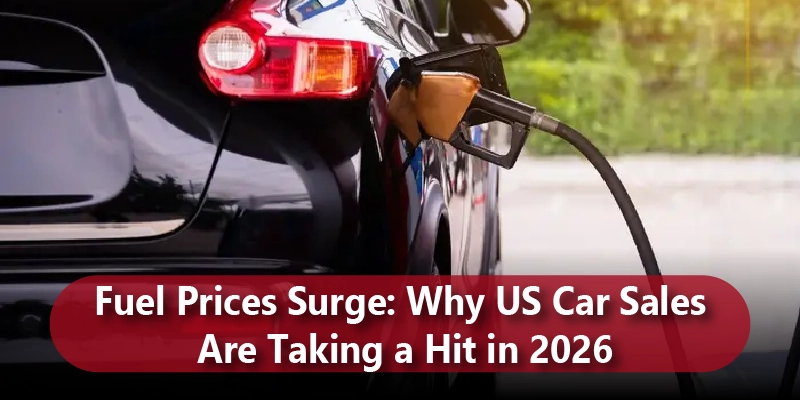
US car sales in 2026 are declining due to high fuel prices, rising interest rates, and reduced EV incentives, making ownership costly.
The US automotive industry has long been a cornerstone of economic stability and consumer confidence. However, 2026 is shaping up to be a challenging year. The US car sales decline in 2026 is not just a temporary fluctuation, and it reflects deeper structural changes in how consumers approach vehicle ownership.
Unlike previous slowdowns driven by supply chain disruptions or short-term economic cycles, the current decline is fueled by multiple long-term pressures. Rising fuel costs, tighter credit conditions, and shifting policy frameworks are all influencing buyer decisions. Consumers are no longer driven by aspiration alone; practicality and financial sustainability are taking precedence.
This transition is reshaping not only what people buy but also when and how they buy vehicles.
What Is Driving the US Car Sales Decline in 2026?
The downturn in vehicle sales is the result of several interconnected factors that together create a challenging environment for both buyers and sellers.
Rising Fuel Prices Are Reshaping Demand
Fuel prices have become one of the most significant determinants of vehicle demand in 2026. With gasoline prices approaching $4 per gallon nationally, the cost of operating a vehicle has increased substantially.
This has led to a behavioral shift:
- Buyers are avoiding fuel-inefficient vehicles
- Long-term running costs are prioritized over upfront pricing
- Consumers are delaying purchases or downsizing vehicle choices
Large SUVs and pickup trucks, once dominant in the US market, are now experiencing reduced demand. On the other hand, compact cars, hybrids, and fuel-efficient models are gaining attention.
Fuel costs are no longer a background expense, and they are central to the buying decision.
High Interest Rates Are Limiting Financing Options
Auto financing has become significantly more expensive in 2026. With average loan interest rates ranging between 6.6% and 7.2%, the cost of borrowing has increased dramatically.
For many buyers, this translates into:
- Higher monthly payments
- Increased total loan cost
- Reduced purchasing power
Even a small increase in interest rates can add thousands of dollars over the life of a loan. This has forced many consumers to reconsider whether purchasing a new vehicle is financially viable.
As a result, demand for new cars has softened, contributing directly to the auto market slowdown in the US.
Expiration of Federal EV Incentives
Electric vehicles were expected to offset declining sales in traditional segments. However, the expiration of key federal tax credits has slowed their adoption.
Previously, incentives reduced the upfront cost of EVs, making them more competitive with internal combustion engine vehicles. Without these benefits:
- EV prices appear less attractive
- Budget-conscious buyers hesitate to switch
- Growth in EV sales has slowed
This has created a gap in the market where neither traditional vehicles nor EVs are experiencing strong growth.
Market Trends and Data Overview
To better understand the scale of the decline, here is a comparison of key market indicators between 2025 and 2026:
| Metric | 2025 Average | 2026 Current/Projected |
| National Gas Price | $3.10 | $3.98 |
| Annual Vehicle Sales | 16.3 Million | 15.8 Million |
| Average Auto Loan APR | 6.4% | 7.1% |
| EV Market Share | 8.2% | 7.8% |
| Demand for SUVs/Trucks | Strong | Declining |
| Demand for Hybrids | Moderate | Increasing Rapidly |
These figures highlight a clear shift in market dynamics, confirming that the car sales drop due to fuel prices is part of a broader economic trend.
How Consumer Behavior Is Changing
The evolving economic landscape has fundamentally altered how consumers approach vehicle ownership.
Shift Toward Practical Vehicles
Consumers are increasingly prioritizing:
- Fuel efficiency
- Reliability
- Lower maintenance costs
This has led to a decline in demand for:
- Large SUVs
- High-performance vehicles
- Luxury models
Instead, buyers are focusing on vehicles that offer long-term value.
Growth of the Used Car Market
The used car market is experiencing renewed growth as buyers seek affordability.
Advantages of used vehicles include:
- Lower purchase price
- Reduced depreciation
- Lower insurance costs
Used electric vehicles are particularly appealing, offering a balance between affordability and efficiency.
Increased Focus on Total Cost of Ownership
Consumers are no longer evaluating vehicles based solely on purchase price. Instead, they consider:
- Fuel expenses
- Loan interest
- Insurance premiums
- Maintenance costs
This comprehensive approach is leading to more informed and cautious purchasing decisions.
Opportunities for Buyers in 2026
Despite the downturn, the current market presents several opportunities for strategic buyers.
Greater Negotiation Power
Dealerships are dealing with higher inventory levels and slower sales. This gives buyers leverage to negotiate:
- Discounts
- Cashback offers
- Favorable financing terms
Vehicles that were once sold at full price are now available with incentives.
Affordable Entry into Electric Vehicles
The used EV market is expanding, offering:
- Lower upfront costs
- Reduced operating expenses
- Protection against fuel price volatility
This creates an opportunity for buyers to transition to electric mobility without a significant financial burden.
Rise of Hybrid Vehicles
Hybrid vehicles are gaining popularity as they provide:
- Improved fuel efficiency
- Flexibility without reliance on charging infrastructure
Manufacturers focusing on hybrid technology are currently performing better in the market.
Common Mistakes Buyers Should Avoid
In uncertain market conditions, poor decisions can lead to long-term financial strain.
Replacing a Paid-Off Vehicle Unnecessarily
Trading in a fully paid vehicle for a new one often results in higher overall expenses. The savings on fuel may not justify the additional loan payments.
Ignoring Basic Maintenance
Simple maintenance practices can significantly improve fuel efficiency. Neglecting these can lead to unnecessary fuel expenses.
Overlooking Insurance Costs
Some fuel-efficient or technologically advanced vehicles come with higher insurance premiums, which can offset cost savings.
Is the Decline Temporary or Long-Term?
The US car sales decline in 2026 is likely a cyclical adjustment rather than a permanent downturn.
Several factors will influence recovery:
- Stabilization of fuel prices
- Reduction in interest rates
- Reintroduction of incentives
- Improvement in economic conditions
However, one lasting change is clear:
Consumers will continue to prioritize efficiency, affordability, and value.
Expert Insight
Industry experts suggest that the real cost of owning a vehicle in 2026 extends beyond the purchase price. Every increase in fuel cost significantly impacts annual expenses, making efficiency a critical factor in decision-making.
What Buyers Should Do in 2026
The automotive market in 2026 demands a far more calculated approach than in previous years. Buyers are no longer operating in a low-interest, stable-cost environment. Instead, they are dealing with fluctuating fuel prices, tighter financing conditions, and changing vehicle demand trends. In such a landscape, a strategic mindset is not optional, but it is essential too.
A well-planned purchase today is less about choosing a popular model and more about understanding long-term financial impact, usage patterns, and market timing. Buyers who fail to adapt to this shift often end up overpaying not just at the dealership, but throughout the ownership cycle.
Smart Buying Strategies
One of the most critical shifts in 2026 is the need to evaluate a vehicle beyond its showroom price. The total cost of ownership has become the defining metric for smart buyers. This includes fuel or electricity expenses, financing costs, insurance premiums, and maintenance over time. A vehicle that appears affordable up front can quickly become expensive if it consumes more fuel or carries higher interest costs.
To make a practical evaluation, buyers should focus on:
- Comparing 3-5 year ownership costs, not just initial pricing
- Estimating monthly fuel or charging expenses based on usage
- Factoring in interest rates, which significantly increase the total payment
- Checking insurance premiums, especially for newer or tech-heavy models
In many cases, this deeper analysis reveals that a slightly higher upfront investment in an efficient vehicle leads to lower long-term expenses.
Another important aspect is choosing the right type of vehicle for current market conditions. Consumer priorities have shifted toward efficiency and practicality, making hybrids and used electric vehicles more relevant than ever. Hybrids provide a balanced solution by reducing fuel consumption without requiring charging infrastructure, while used EVs offer a lower entry cost into electric mobility.
When considering alternatives, buyers should think in terms of real-world usage:
- Hybrids are suitable for mixed driving conditions and long commutes
- Used EVs work best for urban driving with reliable charging access
- Smaller fuel-efficient cars reduce both fuel and maintenance costs
This shift is not just about saving money, and it reflects a broader move toward sustainable and predictable ownership expenses.
Negotiation has also become a powerful tool in 2026. Due to slower sales and increased inventory, dealerships are more open to discussions than in recent years. Buyers who approach negotiations with preparation and flexibility can extract significant value.
Effective negotiation strategies include:
- Comparing offers from multiple dealerships before committing
- Asking for bundled benefits like insurance or service packages
- Using market conditions (slow sales, high inventory) as leverage
- Being willing to delay purchase if the deal is not favorable
In the current environment, patience often translates directly into savings.
At the same time, buyers must remain cautious about overspending on features that do not add meaningful value. Modern vehicles are loaded with upgrades, but not all of them justify their cost in practical terms. The focus should remain on essentials that improve safety, efficiency, and reliability.
It is advisable to prioritize:
- Core safety features over luxury add-ons
- Fuel efficiency over performance enhancements
- Reliability and resale value over cosmetic upgrades
Avoiding unnecessary features helps keep both the purchase price and long-term costs under control.
Best Time to Buy a Car in 2026
Timing is a critical yet often overlooked factor in car buying. In a market experiencing a slowdown, the difference between buying at the right time and the wrong time can be substantial.
One of the most advantageous situations for buyers is when dealerships are holding excess inventory. High inventory levels indicate slower sales, which pushes dealers to offer discounts and incentives to clear stock. This creates a favorable environment for negotiation and better deals.
Buyers can benefit during high inventory periods through:
- Lower vehicle prices due to clearance pressure
- Faster availability of preferred models
- Additional incentives or add-ons to close deals
Another key period is the end of sales quarters. Dealerships operate on quarterly targets, and as deadlines approach, sales teams often become more flexible to meet their numbers. This urgency can result in better pricing or added benefits for buyers who time their purchase strategically.
During these periods, buyers may notice:
- Increased willingness to negotiate
- Limited-time offers aimed at boosting sales figures
- Greater flexibility in financing options
Promotional campaigns also play a significant role in reducing overall costs. Manufacturers frequently introduce offers to stimulate demand, especially in a slower market like 2026. These promotions can significantly improve affordability if used wisely.
Typical promotional benefits include:
- Reduced or subsidized interest rates
- Cashback offers or direct discounts
- Extended warranties or free service packages
Monitoring these campaigns and acting at the right moment can make a noticeable difference in the final deal.
Timing plays a crucial role in securing the best deal.
Frequently Asked Questions
- Why is there a US car sales decline in 2026?
High fuel prices, rising interest rates, and reduced EV incentives have made vehicles less affordable.
2. How do fuel prices affect car sales?
They reduce demand for fuel-inefficient vehicles and increase interest in hybrids and compact cars.
3. Are used car sales increasing?
Yes, affordability concerns are driving higher demand in the used vehicle market.
4. Is it a good time to buy a car in 2026?
Yes, buyers can benefit from discounts and increased negotiation power.
5. Will car sales recover in 2027?
Recovery depends on economic stability, fuel prices, and policy changes.
Key Takeaways
- The US car sales decline in 2026 is driven by multiple economic factors
- Fuel prices are influencing vehicle preferences
- High interest rates are reducing affordability
- Used and hybrid vehicles are gaining popularity
- Buyers are focusing on long-term cost efficiency
Get More Updated Automotive Insights at Ask About Cars!
Have insights or experiences to share? Submit your blog through the link below and become part of our automotive community: https://askaboutcars.com/submit-blog
Leave a Reply
You must be logged in to post a comment.