


The sand-swept highways of the Emirates are witnessing a silent revolution. While the roar of high-performance petrol engines once defined the local automotive culture, a sophisticated hum is taking over the streets. As we move into 2026, electric cars in UAE have transitioned from a niche luxury for early adopters into a mainstream reality for families, commuters, and businesses alike.

With the UAE Net Zero 2050 strategy in full swing and the Dubai Green Mobility Strategy 2030 setting ambitious targets, the local landscape is evolving at breakneck speed. Whether you are a daily commuter on Sheikh Zayed Road or a family looking for a sustainable SUV in Abu Dhabi, this comprehensive guide covers everything you need to know about charging, costs, and the exciting technological leaps awaiting us in 2026.
The Rise of Electric Cars in UAE
The UAE has rapidly climbed the ranks of global electric mobility readiness, currently sitting in the top ten worldwide. This surge is driven by a perfect storm of government vision and consumer demand. By 2026, the number of electric cars in UAE is expected to grow by nearly 30% annually, as the market matures and more affordable models become available.
What makes the Emirates so unique for EV adoption?
- Urban Connectivity: High-density cities like Dubai and Abu Dhabi are perfect for the regenerative braking and range capabilities of modern EVs.
- Climate Innovation: Major manufacturers are now testing hot-weather specifications specifically for the Gulf. By 2026, battery thermal management systems have reached a point where 50°C summers cause minimal range degradation compared to earlier models.
- Local Manufacturing: In a historic shift, the UAE has become a production hub. With companies like NWTN and Switch Mobility establishing roots in the region as a part of the local economy.
EV Charging Stations UAE: Where to Plug In?
In 2026, range anxiety has become a relic of the past. The UAE EV infrastructure has expanded to include over 2,500 public charging points, with Dubai hosting a significant portion through the DEWA Green Charger initiative and Abu Dhabi following suit with the ADNOC-TAQA joint venture, E2GO.
The Public Charging Landscape
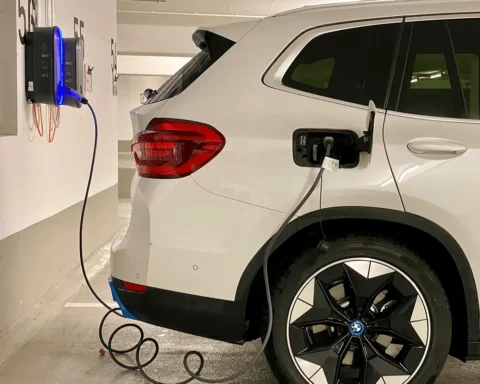
The network is now a seamless mix of government-run stations and private operators. In Dubai, the DEWA Green Chargers are strategically scattered across malls, public parks, and government offices. Meanwhile, Abu Dhabi’s E2GO project has successfully integrated charging points into existing petrol stations and residential communities.
Tesla remains a major player with its proprietary Supercharger network, strategically placed for inter-city travel between Dubai, Abu Dhabi, Al Ain, and the Northern Emirates. However, universal charging standards mean that almost any EV can find a compatible plug within a 5-kilometer radius in major urban centers.
New for 2026: The Era of Megawatt Charging
The most significant leap for the EV future UAE is the rollout of Flash Charging technology. By 2026, ultra-fast charging stations have become common along major highways like E11 and E311. These chargers can provide up to 400 km of range in just 10 to 15 minutes. This reduces the refueling time to roughly the duration of a quick coffee break, making long-distance travel between emirates indistinguishable from driving a petrol car.
Breaking Down the Electric Car Cost UAE
One of the most common questions for potential buyers is the financial commitment. While the sticker price of electric cars in UAE can still be higher than their petrol counterparts for certain luxury models, the Total Cost of Ownership (TCO) tells a much more attractive story for 2026.
1. Purchase Price Categories
The market has diversified significantly. You can now categorize the electric car cost UAE into three main brackets:
- Entry-Level (AED 90,000 – 130,000): Dominated by Chinese giants like BYD and MG, these vehicles offer impressive range and tech for the price of a standard petrol sedan.
- Mid-Range (AED 160,000 – 260,000): This is the most competitive segment, featuring the Tesla Model 3 and Model Y, Hyundai Ioniq 6, and the Kia EV6.
- Luxury & Performance (AED 280,000): For buyers prioritizing prestige and Advanced performance for the luxury SUVs continue to define the premium benchmark..
2. Running Costs: Electricity vs. Petrol
Driving an EV in the UAE remains significantly cheaper per kilometer than internal combustion. On average, charging an EV at home costs about 5 to 7 fils per kilometer, whereas a similar petrol car costs roughly 25 to 35 fils per kilometer, depending on current fuel prices. For a high-mileage driver doing 20,000 km a year, the fuel savings alone can exceed AED 5,000 annually.
3. Maintenance Savings
With fewer moving parts like no oil changes, no spark plugs, and no complex multi-speed transmissions and maintenance for Dubai electric vehicles is approximately 40% cheaper than traditional cars. Regenerative braking also means your brake pads can last up to three times longer than they would on a petrol car, as the motor does most of the slowing down.
Dubai Electric Vehicles: Exclusive Incentives
Dubai remains the regional leader in providing green perks for EV owners. If you drive an electric car registered in Dubai, you currently benefit from:
- Free Salik Tags: While the toll itself is usually charged, the initial tag and registration are often incentivized.
- Designated Free Parking: The RTA provides dedicated green-painted parking slots in high-traffic areas.
- Lower Registration Fees: Renewal and initial registration fees are often discounted to encourage the switch from petrol.
- Priority Charging: Many luxury malls and hotels offer premium, front-row parking specifically for EVs, often with complimentary charging included for customers.
What to Expect in 2026: The New Model Wave
The year 2026 is being hailed as the Year of Choice. We are moving beyond the era where there were only one or two viable options per segment.
- The Electric SUV Boom: With the UAE’s love for large family vehicles, 2026 sees the arrival of more 7-seater electric SUVs like the Volvo EX90 and the Kia EV9, offering ranges that exceed 500 km.
- Increased Competition: The influx of high-tech brands from Asia has forced traditional European manufacturers to lower prices and increase tech features, benefiting the UAE consumer.
- Software-Defined Vehicles: EVs in 2026 are more like smartphones on wheels. Expect over-the-air updates that can improve your car’s range, performance, or even add new safety features while you sleep.
Final Thoughts: Is 2026 the Year to Switch?
With EV charging stations UAE becoming as common as grocery stores and the electric car cost UAE reaching parity with petrol cars in many segments, 2026 is the ideal time to make the transition. You get the latest automotive technology, incredible silent performance, and the peace of mind that comes with a robust, government-backed infrastructure. The future of mobility in the Emirates is quiet, clean, and incredibly fast. As the country moves toward its sustainability goals, being an EV owner puts you at the forefront of this historic transition.
Frequently Asked Questions
As of 2026, there are over 2,500 public EV charging stations UAE. This network spans all seven emirates, with significant density in Dubai, Abu Dhabi, and Sharjah, ensuring you are never far from a power source.
The electric car cost UAE starts at approximately AED 90,000 for compact urban models. Mid-range SUVs and sedans typically cost between AED 160,000 and AED 230,000, while luxury models can exceed AED 400,000.
Yes, owners of Dubai electric vehicles enjoy several perks, including free parking in designated RTA zones, discounted registration fees, and access to a massive network of DEWA Green Chargers.
Using the latest ultra-fast chargers available in the UAE EV infrastructure, you can charge from 10% to 80% in about 15 to 20 minutes. Standard public chargers usually take 3 to 6 hours for a full charge.
The EV future UAE looks incredibly bright, with the government aiming for at least 50% of all vehicles on the road to be electric by 2050. This means continued investment in charging tech and likely more incentives for buyers.
For more car hacks, or car tips, join the conversation at Ask about cars.
For More Related Blogs:
How Electric Cars Are Transforming the Future of Public Transport in the UAE