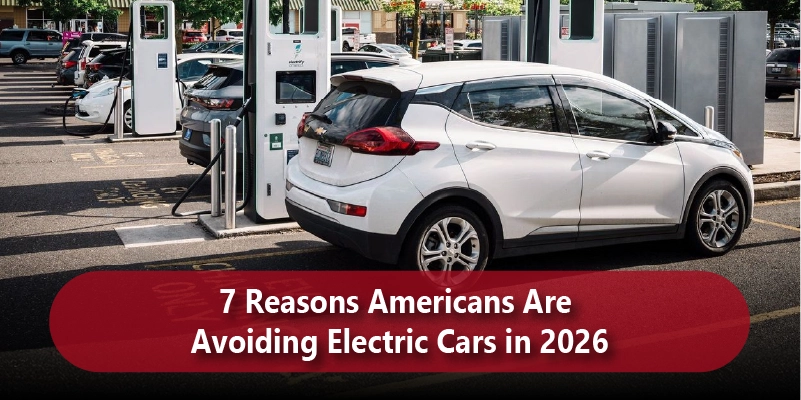
EV demand in the U.S. is slowing in 2026 due to higher ownership costs, charging reliability issues, battery concerns, and reduced incentives.
The EV Market Has Entered a Reality Check Phase
The electric vehicle market in the United States is no longer experiencing the explosive, early-stage growth that defined the first half of the decade. After several years of rapid adoption driven by generous government incentives, aggressive automaker investments, and growing environmental awareness in the market, in 2026 is entering a more mature and measured phase.
This shift does not indicate a decline in interest. Instead, it reflects a natural evolution in consumer behavior. Early adopters, who were motivated by innovation, sustainability, and a willingness to experiment with new technology, have largely already made the transition. The current wave of buyers is fundamentally different.
Mainstream consumers are far more pragmatic. Their decisions are shaped by real-world considerations such as:
- Overall cost efficiency, including purchase price and long-term savings
- Everyday usability, including charging convenience and driving experience
- Long-term ownership risks, particularly related to battery life and resale value
As a result, the EV buying decision is no longer driven solely by excitement. It is now a calculated financial and practical evaluation, where expectations are significantly higher.
This makes 2026 a critical inflection point for the EV industry. The initial enthusiasm has not disappeared, but it is being replaced by scrutiny. Consumers are demanding vehicles that seamlessly integrate into their daily lives without added complexity or compromise.
In this new phase, even minor inconveniences such as unreliable charging infrastructure or unclear long-term costs can become major barriers. For automakers and policymakers, the challenge is no longer just to promote EV adoption, but to deliver a product ecosystem that meets the expectations of a more cautious, value-driven audience.
1. Rising Ownership Costs Are Forcing Buyers to Recalculate
One of the biggest shifts in 2026 is the way buyers evaluate the total cost of ownership rather than just fuel savings. While EVs are still cheaper to run in many cases, the upfront purchase price remains significantly higher than that of comparable gasoline vehicles.
Without strong incentives, buyers now face:
- Higher monthly EMIs due to elevated interest rates
- Increased insurance premiums
- Additional costs for installing home charging systems
For middle-income households, this changes the entire equation. Instead of seeing EVs as a cost-saving investment, they are increasingly viewed as a premium purchase with delayed financial benefits. This is especially important in a market where affordability is becoming the top priority for car buyers.
2. Reduced Incentives Have Lowered the Perceived Value of EVs
Financial incentives were a major driver behind the early success of electric vehicles in the U.S. Tax credits and rebates made EVs feel accessible and financially attractive. In 2026, many buyers no longer have access to these benefits, or they find that eligibility rules have become stricter.
This has created a noticeable psychological shift:
- Buyers feel they are paying more for the same product
- The urgency to switch to EVs has declined
- Comparisons with hybrids and gasoline cars have become more aggressive
When incentives disappear, the decision becomes purely value-driven and for many consumers, EVs currently struggle to justify their higher price point.
3. Charging Infrastructure Still Lacks Consistency and Trust
Although the number of charging stations has increased across the country, reliability remains a major concern.
Drivers frequently encounter:
- Charging stations that are out of service
- Inconsistent charging speeds
- Payment or app connectivity issues
- Compatibility problems between different charging networks
For everyday commuting, EVs perform well and especially with home charging. However, long-distance travel still introduces uncertainty. Until public charging becomes as dependable and seamless as refueling at a gas station, this concern will continue to slow adoption.
4. Battery Longevity and Replacement Costs Are Creating Hesitation
As the first wave of mass-market EVs ages, buyers are becoming more aware of battery degradation over time. Even though modern EV batteries are designed to last many years, they do lose efficiency gradually, which impacts driving range.
The bigger concern lies in replacement costs:
- Battery replacements can run into thousands of dollars
- Warranty coverage is limited to a specific time or mileage
- Post-warranty risks are difficult to predict
This uncertainty directly affects:
- Confidence in long-term ownership
- Resale value of used EVs
- Buyer willingness to enter the second-hand EV market
For many consumers, the possibility of a major future expense outweighs the day-to-day savings.
5. Lack of Home Charging Is a Major Barrier for Many Buyers
A key advantage of EV ownership is the ability to charge at home. However, this benefit is not accessible to everyone.
A large segment of the population lives in:
- Apartments without dedicated parking
- Rental properties where charger installation isn’t possible
- Urban areas with limited private space
For these users, EV ownership becomes less convenient and more expensive, as they must rely on public charging stations.
This leads to:
- Increased charging costs
- Time spent waiting for available chargers
- Reduced practicality for daily use
Until charging access improves for renters and urban residents, EV adoption will remain uneven across different demographics.
6. Real-World Range Variability Is Reducing Buyer Confidence
EV range figures advertised by manufacturers are often based on ideal conditions. In reality, driving conditions can significantly affect performance.
Factors such as:
- High-speed highway driving
- Heavy traffic conditions
- Use of air conditioning or heating
- Cold or extremely hot weather
In colder regions, range drops can be substantial, making trip planning more complicated. In hotter climates, battery cooling systems also impact efficiency.
This variability creates uncertainty, especially for buyers who are used to the predictability of gasoline vehicles.
7. Changing Preferences: Buyers Are Moving Toward Practical Alternatives
Consumer priorities in 2026 are shifting toward practicality and ease of use.
While EVs offer advanced technology and modern features, not all buyers appreciate:
- Touchscreen-heavy controls replacing physical buttons
- Software-based subscriptions for basic features
- Complex user interfaces
At the same time, hybrid and plug-in hybrid vehicles are becoming increasingly attractive.
They provide:
- Better fuel efficiency than traditional cars
- No dependence on charging infrastructure
- Familiar driving experience
- Lower upfront cost compared to EVs
For many buyers, hybrids represent a balanced and low-risk option, delivering the benefits of electrification without the uncertainties associated with full EV ownership.
EV vs Gas vs Hybrid in 2026
| Feature | Electric Vehicles (EVs) | Gasoline Vehicles | Hybrid Vehicles |
| Purchase Price | Higher | Moderate | Moderate |
| Running Cost | Low | High | Low |
| Infrastructure Dependence | High | Low | Low |
| Long-Distance Convenience | Moderate | High | High |
| Maintenance | Lower | Moderate | Moderate |
| Resale Stability | Variable | Stable | Stable |
| Charging/Refueling Time | Longer | Quick | Quick |
| Best Fit Users | Homeowners, urban commuters | General users | Mixed usage drivers |
Common Mistakes That Lead to EV Regret
Many buyers entering the EV market are still influenced by trends, social perception, and the growing push toward electrification rather than making fully informed, practical decisions.
A common issue is the failure to calculate the total cost of ownership. Buyers tend to focus on fuel savings while overlooking other critical expenses such as financing costs, insurance premiums, home charger installation, and potential depreciation. Without a complete financial picture, the perceived savings can quickly diminish.
Another major oversight is charging accessibility. Many consumers assume that public charging networks will seamlessly replace fuel stations, but real-world experiences can differ.
Range expectations are also frequently misunderstood. Advertised figures are based on controlled conditions, but real-world driving, affected by speed, weather, traffic, and terrain, can lead to noticeable reductions.
Insurance and repair costs are another area where buyers are often unprepared. EVs typically have higher insurance premiums due to expensive components and specialized repairs.
Perhaps the most critical factor that gets overlooked is the battery warranty and long-term coverage. Many buyers do not fully understand the terms, including duration, mileage limits, and what exactly is covered.
Avoiding these mistakes requires a data-driven and lifestyle-focused approach to car buying. Instead of relying on general trends or assumptions, buyers need to evaluate how an EV fits into their daily routine, financial situation, and long-term plans.
The current slowdown in electric vehicle adoption should not be interpreted as a failure of the EV market. Instead, it represents a critical transition phase that every disruptive technology goes through as it moves from early enthusiasm to widespread acceptance.
During the early stages, EV growth was largely driven by early adopters, who are a segment of buyers who are more willing to embrace new technology despite limitations. These consumers prioritized innovation, environmental impact, and the overall experience of owning something new and forward-thinking.
In 2026, the market is shifting toward the mass-market audience, which operates under a completely different set of expectations. These buyers are not driven by novelty; they are driven by practicality, value, and reliability. As a result, the criteria for success in the EV market are evolving.
This transition brings a new level of pressure on automakers and the broader EV ecosystem:
- Higher expectations: Consumers now expect EVs to match or exceed traditional vehicles in convenience, cost efficiency, and reliability, not just offer environmental benefits.
- Greater scrutiny: Buyers are analyzing every aspect of ownership, from charging accessibility to long-term maintenance costs, before making a decision.
- Demand for practical solutions: The focus has shifted from Is this technology exciting? Does this fit seamlessly into my daily life?
In this environment, innovation alone is no longer enough. Features like large touchscreens, software integrations, and futuristic design elements are becoming secondary to core ownership fundamentals.
Automakers must now recalibrate their strategy and prioritize:
- Affordability: Bringing down purchase prices to make EVs accessible to a broader audience
- Reliability: Ensuring consistent performance, durable components, and dependable charging ecosystems
- User experience: Simplifying interfaces, improving ergonomics, and delivering a hassle-free ownership journey
This phase is essential for long-term success. It forces the industry to move beyond hype and address real-world challenges, ultimately leading to better products and stronger consumer trust.
Future Outlook: What Needs to Change
For EV adoption to accelerate again, several key developments are required:
1. Cost Reduction
Affordable EV models must become widely available.
2. Charging Reliability
Infrastructure must match the reliability of gas stations.
3. Battery Innovation
Longer-lasting, lower-cost batteries like solid-state can transform the market.
4. Policy Support
New incentives or financing models could stimulate demand.
5. Urban Charging Solutions
Improved access for renters and city residents is critical.
Frequently Asked Questions
- Why are Americans buying fewer EVs in 2026?
High prices, reduced incentives, and unreliable charging are slowing adoption.
2. Are EVs still a good investment in 2026?
Yes, but mainly for users with home charging and predictable usage.
3. What is the biggest drawback of EV ownership today?
Charging infrastructure reliability remains the biggest issue.
4. Why are hybrids becoming more popular?
They offer flexibility without charging dependency.
5. Is EV battery replacement expensive?
Yes, costs remain high after warranty expiration.
6. Do EVs save money long-term?
They can, but savings depend heavily on usage and charging method.
Key Takeaways
- Electric vehicle demand in 2026 is no longer growing at the rapid pace seen in previous years, but this does not mean the market is weakening. Instead, it is stabilizing as consumers take a more practical and calculated approach to buying decisions.
- Two of the biggest challenges influencing this shift continue to be cost and infrastructure. The higher upfront price of EVs, combined with inconsistent charging availability in many areas, makes it difficult for a large portion of buyers to fully commit.
- At the same time, consumer priorities are changing. Buyers are now placing greater importance on reliability, predictability, and ease of use rather than being attracted solely by advanced technology or futuristic features.
- As a result, many consumers are turning toward hybrid and plug-in hybrid vehicles. These options provide improved fuel efficiency and lower emissions while avoiding the challenges associated with charging infrastructure.
- Overall, the EV market is not declining and it is evolving into a more mature and balanced phase. This stage is characterized by informed decision-making, higher expectations, and a stronger focus on real-world usability.
Get More Updated Automotive Updates at Ask About Cars!
For advertising, sponsored content, or brand collaboration opportunities on this platform, please visit: https://askaboutcars.com/advertise/
Leave a Reply
You must be logged in to post a comment.